
Table of Contents

HR software for large enterprises is a unified platform built to manage complex workforce operations for organizations with 500 or more employees. Unlike SME tools that cover basic attendance and payroll, enterprise HRMS platforms handle multi-entity payroll, statutory compliance across states, role-based access for large HR teams, and AI-powered workforce analytics from one system.
Enterprise businesses continue to grow, expanding into new markets and regions worldwide. Cloud-based HR software for enterprises is essential to meeting the varied needs of regional differences in local laws and cultures. Selecting the right platform means matching it to your specific requirements, company culture, and compliance needs. This guide covers the 14 best enterprise HR software options for Indian organizations in 2026, with verified ratings, pricing, and honest comparisons.
TL;DR
- Built for HR leaders at organizations with 500 or more employees who are evaluating 3 to 5 shortlisted vendors.
- Covers platforms with Indian statutory compliance, multi-entity payroll, and enterprise-grade security
- Ratings sourced strictly from G2 and Capterra; pricing from official product pages only
Quick Comparison: Best Enterprise HR Platform at a Glance
Here is a quick comparison table of HR software for enterprises in India. We have compared them based on starting price, features like performance management, support for Indian compliance, and multi-entity payroll. We have added G2 and Capterra ratings so you can compare the software by popularity as well.
| # | Software | Pricing (per employee/month) | Best For | India Compliance (PF/ESI/PT/Labor Codes) | Rating (G2/ Capterra) | Free Trial |
|---|---|---|---|---|---|---|
| 1 | factoHR | Custom quote | Indian enterprises with multi-entity payroll & deep statutory compliance | Full native PF trust, ESI, PT, LWF, Labor Codes 2025 | 4.6 / 4.7 | No (demo only) |
| 2 | easyHR | Starts at ₹60 | Indian SMEs, multi-location businesses, and field-heavy workforces | Full native (PF, ESI, PT, TDS, LWF, Gratuity) | 4.7 / NA* | Yes (14 days) |
| 3 | Workday HCM | $40–$100 (~₹3,300–₹8,300) | Global multinationals need unified HR + finance planning | Partial needs add-ons for the Indian statutory | 4.0 / 4.4 | No (demo only) |
| 4 | QkrHR | ₹40–₹180 (min 50 users) | Indian SMBs needing unified core HR, payroll, and field force management | Full native (PF, ESI, PT, TDS, Gratuity) | 4.8 / 4.8 | No (demo only) |
| 5 | BambooHR | $6–$9 (~₹500–₹750) | Mid-market companies with simple HR needs | Limited, no native Indian payroll | 4.5 / 4.6 | Yes (7 days) |
| 6 | UKG Pro | Custom quote | Large US-centric workforces, complex scheduling | Limited to India’s global focus | 4.2 / 4.2 | No (demo only) |
| 7 | Keka | ₹6,999–₹19,999/month (slab-based) | Modern mid-to-large Indian companies, payroll-first | Strong PF, ESI, PT, TDS automated | 4.5 / 4.6 | Yes (7 days) |
| 8 | greytHR | ₹3,495–₹7,495/month (up to 250 employees) | Indian SMB & mid-market payroll & compliance | Strong native India compliance | 4.4 / 4.5 | Yes (7 days) |
| 9 | SAP SuccessFactors | $84.53/user/year base (~₹7,000+/yr) | Global enterprises are already in the SAP ecosystem | Available via add-on (Employee Central Payroll India) | 4.0 / 3.9 | No (demo only) |
| 10 | Oracle HCM Cloud | $13–$15 (~₹1,100–₹1,250) | Global Fortune-500 enterprises on the Oracle stack | Available via localization pack | 3.8 / 4.1 | No (demo only) |
| 11 | Darwinbox | Custom quote (typically ₹120–₹250) | Large Asia/India enterprises wanting unified HCM | Strong native India compliance | 4.4 / 4.5 | No (demo only) |
| 12 | Zoho People | ₹48–₹350 | Mid-sized companies in the Zoho ecosystem | Moderate needs Zoho Payroll for full compliance | 4.4 / 4.4 | Yes (15 days) |
| 13 | Rippling | $8+ (~₹670) base + modules | Tech-forward firms combining HR + IT automation globally | India payroll available; Labor Codes via partner | 4.8 / 4.9 | No (demo only) |
| 14 | ZingHR | Custom quote (~₹80–₹200) | Large Indian enterprises in BFSI, retail, and manufacturing | Strong native India compliance | 4.2 / 4.3 | Yes (limited) |
How did We Evaluate HR Platforms for Growing Enterprises for this List?
We evaluated these 14 HR software for enterprise based on 5 criteria, including –
- Compliance support for Indian statutory laws. Support for PF, ESI, PT, TDS, and LWF calculations along with CTC policies and new labour laws.
- Integration. Both internal integrations within the software between HR, payroll, attendance, and other modules, and external third-party integrations with ERPs and accounting systems in a single tenant.
- Multientity support. Support for multiple entities/users.
- Transparency and pricing. Modular, quote-based, tiered, and PEPM (per employee per month) published plan details.
- Best use case. Comparison based on suitability for different businesses, including manufacturing, IT, consumption, and other sectors in India.
Sources:
- Ratings: G2 and Capterra
- Pricing: Official product pages. *Pricing may fluctuate. We recommend you check the pricing page of any product before considering purchase.
List of 14 Best Enterprise HR Platforms

1. factoHR
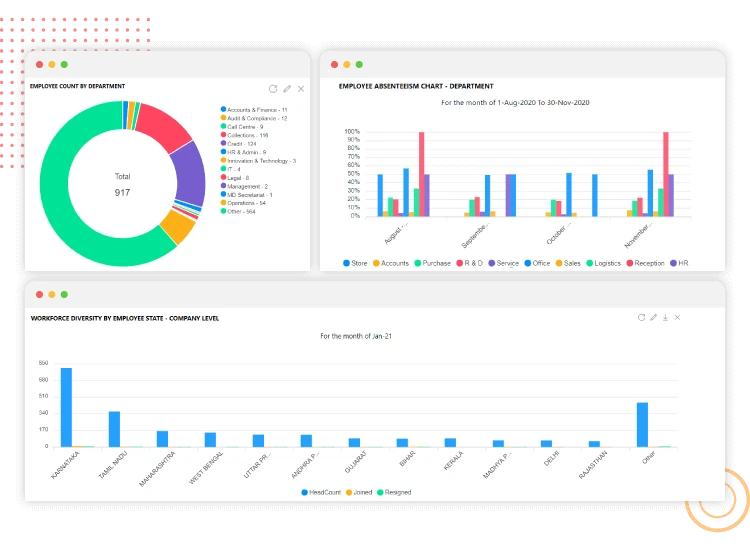
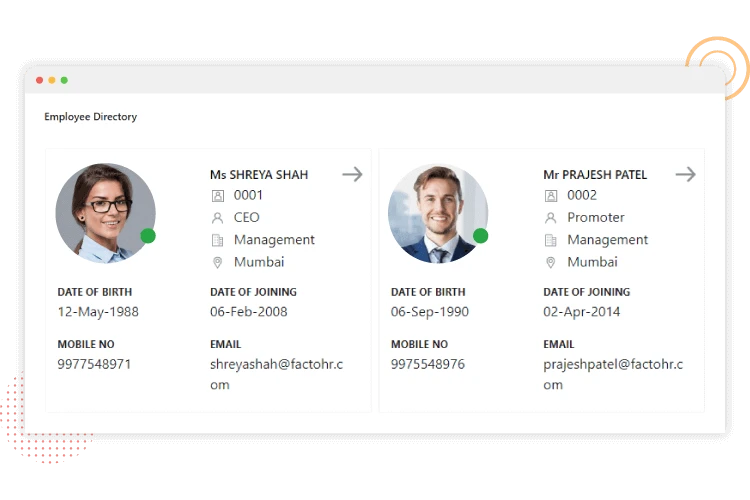
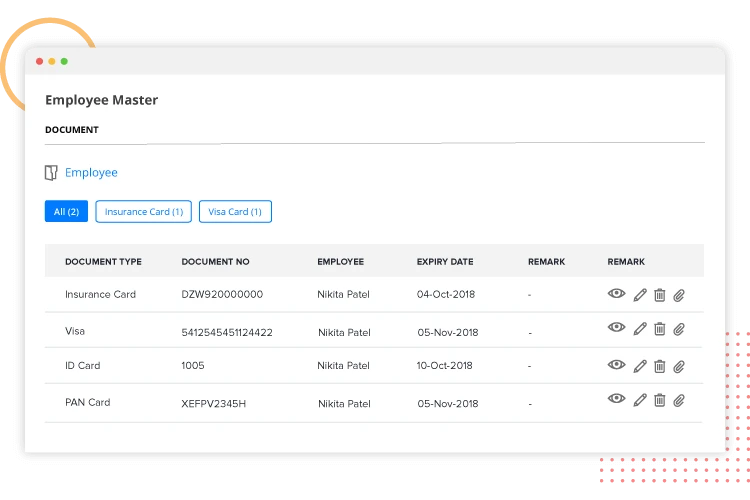
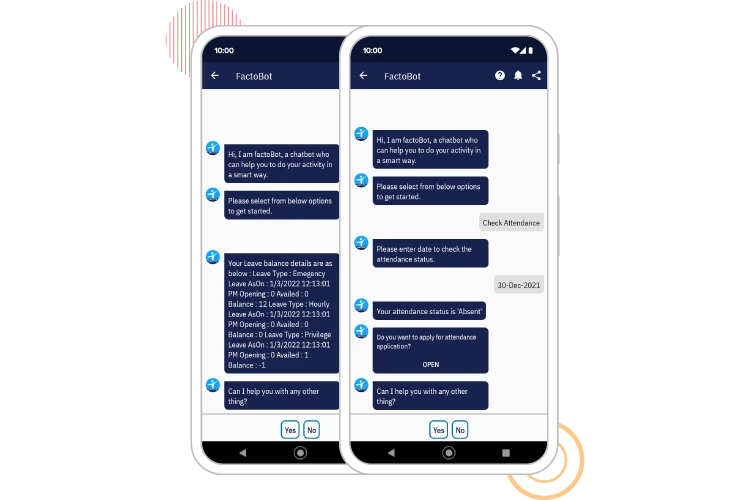
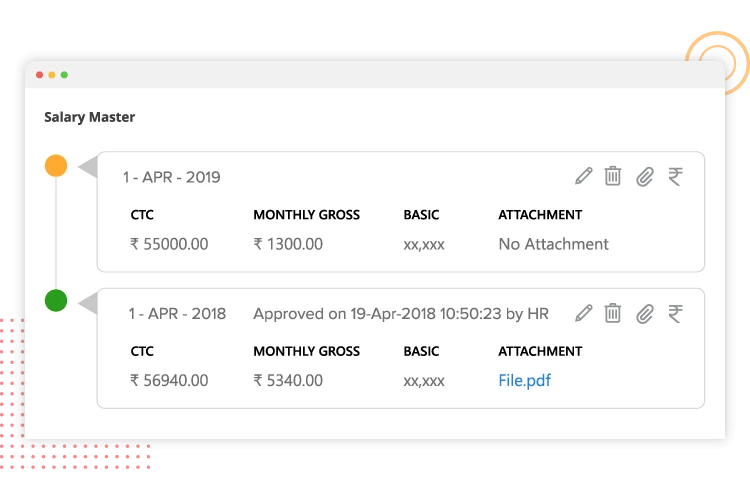
factoHR is elite HR software for enterprise businesses, offering a secure, cloud-based system that streamlines employee transitions with simplified onboarding and offboarding. Their easy-to-use interface helps HR teams focus on key operational activities, leading to improved business performance.
An award-winning HR cloud-based software, it has worked with national and international brands in diverse industries. Its outstanding AI features and simplified HR operations combine to serve different enterprise businesses in 20+ countries.


Pros
- Strong India compliance (EPF, ESIC, PT, and new labor codes, 2025)
- Mobile-first design
- AI chatbot (FIA) for employee queries
- 20+ country coverage
Cons
- Limited presence outside India/APAC
- Limited global compliance support outside India /APAC.
- Easy-to-use interface, but takes time to get used to.
Key Features
| Analytics dashboards for data-driven decisions | 100% compliant payroll processing |
| Automated onboarding for the new hire experience | Multi-level business process automation workflows |
| Auto-generated letters via pre-defined templates | Intelligent chatbot for employee query resolution |
| Document sharing via the mobile plug-me feature | Organizational tree defining clear career paths |
| Offboarding module with full and final settlement | Role-based access, centralized employee database |
| Survey module for real-time employee feedback | Integrations: Slack, MS Teams, SAP, Oracle, Tally, BambooHR |
Pricing
Offers customized quotes based on your headcount and module choices.
Best for
factoHR generally favors enterprises of all sizes. But more specifically, small businesses with medium-scale operations throughout India should prioritize this software.
Verdict
Top choice for all businesses, including smaller businesses with less than 500 employees, as well as large enterprises with more than 5000 employees.

2. easyHR
easyHR is an enterprise-grade, cloud-based HR management system built to streamline human capital operations. It provides enterprise businesses with a centralized platform to manage employee records, time and attendance, travel, and expenses, establishing highly efficient workforce administration.
It supports corporate enterprises through automated payroll processing and an interactive employee self-service portal, which systematically reduces the administrative workload on HR departments.

Features
- Asset Management
- Attendance & Leave Management
- Document Management
- Employee Self-Service Portal
- Global Payroll Processing
- Performance Management
- Recruitment & Onboarding
- Statutory Compliance Tracking
Pros
- Extremely intuitive interface with near-zero learning curve
- Rapid implementation time, often completed within days
- Native automation for Indian statutory compliance (PF, PT, TDS)
Cons
- Lacks advanced workforce forecasting for complex enterprises
- Limited third-party integrations with legacy ERP systems
Pricing
A free trial is available on request for the Enterprise plan. Custom pricing based on your business needs.
Best Suited for
This platform is best suited for large-scale enterprise businesses seeking a comprehensive and automated solution to manage their distributed HR processes.
Verdict
Ideal for businesses operating across multiple industries.

3. Workday
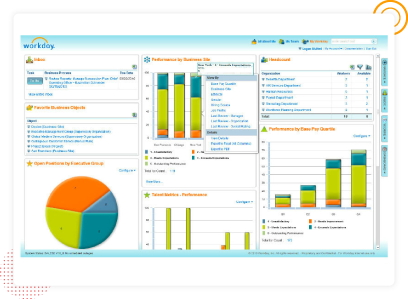
Workday HCM is one of the most widely adopted enterprise HR platforms. It delivers a comprehensive, cloud-native suite covering core HR, payroll, talent management, workforce planning, and benefits administration. Its strongest differentiator is the integration of HR and financial data, giving CHROs and CFOs a single system of record for workforce cost modeling and strategic planning across large, distributed organizations.
Key Features
- Document Management
- Email Integration
- Project Management
- Collaboration Tools
- Timesheet Management
- Contract Management
- Calendar Management
- Reporting
Pros
- HR and financial data in one system
- Scales from 1,000 to 100,000+ employees
- Extensive global partner and integration ecosystem
Cons
- India’s statutory compliance requires localization partners
- Implementation typically takes 9 to 18 months
Pricing
Pricing available upon contact. Workday uses modular, negotiated enterprise pricing based on headcount and activated modules.
Best for
Multinational enterprises with 1,000+ employees that need unified HR and financial planning across global operations.
Verdict
Great choice for large businesses with a global presence, but would need local compliance partners for Indian businesses.


4. QkrHR
QkrHR is a complete hire-to-retire HRMS designed for Indian enterprises that need a single connected platform instead of managing multiple disconnected tools. Built to streamline both office and on-ground workforce operations, QkrHR comes with field force automation, task management, and expense management as core features from day one – not paid add-ons.
Designed for enterprises managing distributed teams, multiple entities, and complex payroll operations, QkrHR combines operational depth with a simple and user-friendly experience. Its smart dashboards provide employees with personalised, role-based workspaces. With a fully policy-configurable system, businesses can customise workflows, approvals, attendance rules, leave structures, payroll policies, and processes according to their own company work style and operational needs.

Key Features
- Payroll with Indian statutory compliance
- Fully Policy-Configurable System
- Built-in Field Force Management
- Integrated Expense & Task Management
- Unlimited Workflow & Approval Configuration
- Employee-Loved ESS Portal
- In-App Guided and on-call Assistance
Pricing
Price Range ₹40–₹180 per employee/month with custom enterprise pricing, all core features included.
Best for
Small, mid-sized, and enterprise organizations with distributed, field-based, and multi-entity workforces.

5. BambooHR
BambooHR is one of the most widely recognized names in HR software, known for its intuitive interface and strong employee lifecycle management. It handles everything from applicant tracking and onboarding to payroll, time tracking, and performance management in one easy-to-navigate platform. Its design philosophy centers on usability, making it a go-to choice for HR teams.

Key Features
- Document Management
- Employee Self-Service Management
- Expense Management
- Payroll Management
- Performance Management
- Recruitment Management
Pros
- Exceptionally clean, highly usable interface
- Strong eNPS and employee feedback tools
- Reliable centralized HR records and PTO tracking
Cons
- Not built for Indian statutory compliance requirements
- Limited reporting depth for complex enterprise needs
Pricing
Pricing available upon contact. Plans are modular and based on company size and active features.
Best for
Small to mid-sized businesses with 50 to 1,000 employees are looking for a straightforward design.
Verdict
It is a right fit for owners who want easy-to-use software.


6. UKG Pro
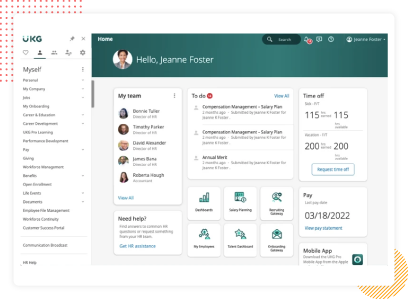
UKG Pro is an enterprise-grade HCM platform built for organizations that need strong workforce management alongside core HR. It is particularly well-regarded in manufacturing, healthcare, and retail for its capabilities in complex scheduling, shift management, and multi-location compliance. UKG Pro supports payroll processing across 160+ countries with country-specific compliance tools, making it suitable for enterprises with an international workforce.
Key Features
- Time Tracking
- Self-Service Portal
- Employee Scheduling
- FMLA Tracking
- Calendar Management
- Benefits Management
- Overtime Calculation
Pros
- Comprehensive leave and absence management
- Strong scheduling for shift-based workforces
- Broad compliance coverage across 160+ countries
Cons
- Implementation typically runs 12 to 20 months
- Platform complexity is steep due to the Kronos merger
Pricing
Pricing available upon contact. UKG Pro uses custom enterprise pricing based on headcount and module configuration.
Best for
Mid-to-large enterprises (500 to 10,000+ employees) in manufacturing, healthcare, and retail with complex scheduling and compliance requirements.
Verdict
Ideal for the manufacturing industry in particular.

7. Keka HR
Keka is one of the most popular HR and payroll platforms among Indian mid-market companies. It brings together payroll, attendance, leave, performance, and recruitment in a clean, modern interface that is widely praised for its adoption speed. Keka processes payroll in a simplified 6-step workflow with native support for PF, ESI, PT, and TDS. G2 data shows 92% of Keka users report using the platform every day, reflecting consistently strong daily utility.

Key Features
- Human resource data management
- 360-degree performance appraisal format
- ERP integration capability
- Attendance monitoring
- Customizable application and workflow configuration
Pros
- Fast payroll with native India compliance
- Clean modern interface, minimal training needed
- Highly responsive customer support team
Cons
- Third-party integration options are still limited
- Customization depth constrained for complex workflows
Pricing
Starts at ₹6,999/month for up to 100 employees. Modular plans are available based on company size and selected features.
Best for
Growing Indian businesses with 50 to 2,000 employees in IT, services, and financial sectors.
Verdict
Best for businesses needing easy-to-implement software.


8. greytHR
greytHR is one of India’s most established cloud-based HRMS platforms, built around payroll accuracy and statutory compliance. It is a strong choice for HR teams that prioritize payroll compliance. It offers automated calculations for PF, ESI, PT, and TDS, and an employee self-service portal. Trusted by over 27,000 companies across India and the Middle East, it serves as a reliable workhorse for compliance-focused organizations.

Key Features
- Statutory Compliance Management
- Employee Self-Service Portal
- Streamlined Onboarding Process
- Attendance Tracking System
- Performance Appraisal System
- Mobile Access Support
Pros
- Indian statutory compliance automation
- Quick payroll processing, minimal manual effort
- Affordable and accessible for HR teams
Cons
- Analytics and reporting depth are limited for enterprises
- Customization is limited for non-standard leave policies
Pricing
- Free plan available for up to 50 employees.
- Paid plans range between ₹3,495/month and ₹7,495/month.
Best for
Small to mid-sized Indian businesses with 50 to 5,000 employees that want reliable payroll-first HR automation without heavy implementation overhead.
Verdict
Great option for founders who are exploring HR software for the first time.

9. SAP SuccessFactors
SAP SuccessFactors HCM is a global cloud suite trusted by over 10,000 organizations worldwide, covering core HR, payroll, talent management, learning, and workforce analytics. It is the natural choice for enterprises already running SAP ERP, functioning as the people-data backbone across SAP Business Suite. Its 2025 releases added AI-assisted performance reviews and sentiment analysis, deepening its talent management capabilities.

Key Features
- AI copilot for payroll transparency
- Global payroll, 100+ country localizations
- Centralized employee database and org management
- Recruiting ATS with goal tracking, succession planning
- Learning management system with curated content
- Compensation management and workforce analytics
- AI-assisted 360-degree performance reviews
Pros
- Integration with the broader SAP enterprise suite
- Highly modular, start small and grow coverage
Cons
- UI is widely described as dated and inconsistent
- High total cost of ownership, including implementation
Pricing
Pricing available upon contact. SAP SuccessFactors uses custom enterprise pricing based on module selection and headcount.
Best for
Large enterprises (1,000+ employees) with global operations and existing SAP ERP infrastructure, especially those requiring deep talent management.
Verdict
Great choice for businesses that are familiar with SAP infrastructure.


10. Oracle HCM Cloud
Oracle Fusion Cloud HCM is a comprehensive enterprise HR suite spanning the full employee lifecycle from hiring to retirement. Its core strength is deep configurability and tight integration with Oracle’s enterprise ecosystem, making it valuable for organizations running Oracle ERP or Oracle Financials. AI and machine learning are embedded to automate HR workflows, personalize employee journeys, and improve workforce forecasting across complex organizational structures.

Key Features
- Global HR with configurable org structures
- Workforce modeling and advanced HR analytics
- Talent management covering the full employee lifecycle
- Rules-based global payroll with auto compliance updates
- Integration with Oracle ERP, financials, and supply chain
- Learning management with development tracking
Pros
- Highest configurability of any platform listed here
- Strong alignment with Oracle ERP infrastructure
- Proven at scale across large global enterprises
Cons
- Consistently lower ease-of-use satisfaction ratings
- Extensive, expensive implementation dependent on partners
Pricing
Pricing available upon contact. Oracle uses custom enterprise pricing based on headcount, modules, and deployment scope.
Best for
Large enterprises (1,000+ employees) with complex global HR requirements and existing Oracle ERP infrastructure.
Verdict
Perfect fit for businesses that operate across borders.

11. Darwinbox
Darwinbox is a modern, cloud-based HCM platform purpose-built for enterprises across Asia, the Middle East, and global markets. It brings AI-powered automation, a mobile-first design, and strong employee engagement tools to enterprise HR, covering the full employee lifecycle. Trusted by over 1,000 organizations, including Starbucks, JSW Group, and Apollo, it is one of the fastest-growing enterprise HR platforms.

Key Features
- Core HR with configurable org structures
- Real-time workforce analytics dashboards
- Recruitment from requisition to automated offer letter
- Payroll management with a 4-step simplified process
- AI-powered attendance with face recognition and geo-tagging
- Performance management with continuous feedback
- Employee engagement tools with sentiment surveys
Pros
- Modern mobile-first interface, high adoption rates
- AI automation across attendance, performance, and payroll
- Strong APAC compliance and India-specific HR support
Cons
- India’s statutory compliance may need supplementing
- Customer support responsiveness flagged in reviews
Pricing
Pricing available upon contact. Darwinbox offers custom enterprise pricing based on headcount and modules.
Best for
Mid-to-large enterprises (200 to 10,000+ employees) across Asia-Pacific are prioritizing employee engagement and mobile-first operations.
Verdict
Ideal choice for businesses that want an employee-centric solution.


12. Zoho People
Zoho People is a flexible, cloud-based HR platform that handles employee records, time and attendance, leave management, performance appraisals, and workflow automation, with strong customization capabilities. It integrates natively with Zoho CRM, Zoho Books, Zoho Recruit, and third-party tools via API. A practical choice for organizations already standardizing on the Zoho suite, it offers a broad feature set at a significantly lower price point than most enterprise platforms.

Key Features
- Time and attendance with clock-in, timesheets, and regularization
- Leave management with custom policies and auto accruals
- Performance appraisal with 360-degree feedback and OKRs
- Workflow automation with custom forms and multi-stage approvals
- Integration with the full Zoho ecosystem and external tools via API
- Document management and HR letters
Pros
- Exceptionally high customizability without coding required
- Very accessible pricing relative to enterprise alternatives
- Seamless integration across the Zoho business suite
Cons
- Support response times are inconsistent per Capterra reviews
- Advanced features are gated behind higher-tier plans
Pricing
Starts at ₹106/user/month
Best for
Verdict
Great fit for small to mid-sized businesses that need affordable, easy-to-integrate software.

13. Rippling
Rippling is the only platform on this list that unifies HR, IT, and payroll in a single system. When an employee joins, Rippling automatically provisions their apps, laptop, and payroll in around 90 seconds. When they leave, access is revoked across all systems simultaneously. It supports global payroll across 185+ countries and has been named a top HR software product on G2’s Best Software Awards for consecutive years.

Key Features
- 500+ integrations via open API marketplace
- Workforce analytics and compliance monitoring
- Unified HR, IT, and payroll on one employee record
- Global payroll across 185+ countries, automated tax filing
- Device and app provisioning for new hires from day one
- Benefits management with health and retirement integration
- Automated onboarding and offboarding workflows
Pros
- Only platform natively unifying HR and IT automation
- Global payroll capability across 185+ countries
Cons
- India’s statutory compliance requires additional local tools
- Benefits configuration limitations flagged by Capterra reviewers
Pricing
Starts at ₹680/user/month.
Best for
Tech-forward companies are scaling quickly internationally, particularly those managing both remote and in-office employees.
Verdict
Good for businesses that operate in a hybrid work environment.


14. ZingHR
ZingHR is an AI, machine learning, and blockchain-powered HCM platform designed for Indian enterprises. Funded by Tata Capital Growth Fund-II, it covers five pillars: HR Ground Zero, Workforce Management, Talent Acquisition, Talent Management, and Employee Engagement. Its Power BI-integrated analytics and 400+ configurable employee-record fields make it a strong option for large Indian organizations seeking a homegrown, enterprise-grade platform.

Key Features
- 400+ configurable fields for employee records
- AI-powered performance appraisal workflows
- End-to-end payroll with statutory compliance (PF, ESI, PT)
- Recruitment and onboarding with automated screening
- Attendance with face recognition and real-time tracking
- Power BI-integrated workforce analytics dashboards
- Employee self-service with leave, expense, and performance access
Pros
- AI, ML, and blockchain edge among Indian platforms
- Tata Capital backing, strong enterprise support infrastructure
- Strong India compliance with mobile-first design
Cons
- Smaller global integration ecosystem than Workday or Rippling
- Lower public review volume limits pre-purchase benchmarking
Pricing
Pricing available upon contact.
Best for
Mid-to-large Indian enterprises (200 to 10,000+ employees) in manufacturing, BFSI, and IT.
Verdict
Good for businesses shifting from another HRMS to improve security and compliance support.
How to Choose the Right HR Software for Enterprise
Consider these five factors when selecting enterprise HR software.

Assess Your Employee Count and Growth Projection
For example, platforms like BambooHR and Zoho People work well for sub-500 teams. Other platforms, like factoHR, offer customizable models that work equally well for small, medium, and large teams. Lastly, Workday and UKG Pro are built for 500 to 10,000+ employees.
Picking a platform you will outgrow in 18 months is a costly decision. Compare HR software by business size before shortlisting.
Identify Must-Have Integrations
Your HRMS touches your ERP, payroll, bank, biometric attendance hardware, and productivity suite daily. Ask vendors for confirmed native integrations, not API possibilities. Review your organization’s HR software integration requirements before shortlisting to avoid costly middleware decisions later.
Check Compliance Requirements
For Indian enterprises, compliance covers two dimensions: data security certifications (SOC 2, ISO 27001, VAPT) and statutory labor coverage (PF, ESI, PT, LWF, Factories Act). Global platforms often need localization partners for India. Map your specific statutory compliance requirements before issuing an RFP.
Evaluate Implementation Timeline
Ask each vendor for a milestone-based implementation plan in writing. HRIS implementation teams consistently flag data migration and change management as the two biggest timeline risks. Specifically, implementing software like Workday can take 3 to 20 months, depending on complexity and headcount.
Calculate Total Cost of Ownership
Licensing fees are rarely the full picture. Add implementation costs, consulting fees, integration development, training, and ongoing support contracts. A platform at ₹680/user/month can cost 3x that amount to implement for a 1,000-person organization. A proper HR software ROI model built before shortlisting helps avoid getting locked into the wrong platform.
Which HR Platform for Growing Enterprises is Best for Multi-Entity Payroll and Indian Compliance?

The most common enterprise HR software features include –
- Centralized database,
- Payroll management,
- Statutory compliance,
- Performance evaluation,
- Workflow automation,
- Security and data privacy, and
- Easy integration.
Centralized Database
A centralized employee database holds all records, documents, and compliance information in one location with entity-level segregation for multi-entity organizations. Without it, even basic payroll software functions become error-prone across business units. This is the backbone of all other HR operations.
Payroll Management
Enterprise payroll covers multi-entity processing, arrear management, variable pay, statutory filings, and bank payment file generation simultaneously across states. A strong payroll software should process 1,000+ payslips in a single run with a verifiable audit trail and zero manual intervention on compliance calculations.
Deep Statutory Compliance
For Indian enterprises, platforms must automate PF, ESI, PT, LWF, Factories Act registers, and Labor Codes 2025 without manual intervention. The best statutory compliance tools keep legal updates automated so HR does not carry compliance risk on a spreadsheet.
Performance Evaluation
Look for OKR-based goal setting, multi-level calibration workflows, 360-degree feedback, and performance-linked compensation processing. The evaluation system should scale to complex hierarchies without breaking configuration. Most platforms offer performance management modules, but the depth varies significantly across vendors.
Complex Workflow Automation
Enterprise HR teams process hundreds of approval workflows daily. Look for maker-checker workflows, configurable escalation rules, and SLA-based notifications. Platforms that automate business process workflows at enterprise scale significantly reduce the HR team’s workload and eliminate bottlenecks in the employee experience.
Advanced Security and Data Privacy
Your platform must offer role-based access control, 256-bit encryption, audit logs, SOC 2 compliance, VAPT certification, and SSO at a minimum. For listed companies, compliance with the Companies Act 2013 audit trail requirements is non-negotiable. BFSI enterprises should additionally verify alignment with RBI and SEBI data governance guidelines.
Integration without Friction
Your HRMS will connect with your biometric hardware, ERP, accounting software, payroll bank, and productivity tools every day. Native integrations, not API workarounds, are what enterprise HR teams actually operate with. Evaluate the depth of each vendor’s connection with your current tech stack before signing any contract.
Final Verdict
Choosing an enterprise HRMS is a long-term commitment. The platform you pick will shape how your HR, payroll, compliance, and performance teams work for years. So the goal of this conclusion is simple: help you decide fast.
Best platform by use case:
- factoHR – Trusted by BSE-listed companies like Tata Steel (BSL), Mercedes-Benz, and Wipro.
- Workday – Global organizations need unified HR and financial planning.
- Rippling – Tech-forward companies scaling internationally and combining HR with IT automation.
- Keka – Modern, India-first payroll and people operations for mid-to-large teams.
Your next steps:
- Shortlist 3 vendors that fit your size, geography, and compliance needs.
- Request live demos focused on your specific workflows, not generic walkthroughs.
- Issue an RFP with measurable criteria (compliance, integrations, SLAs, TCO).
- Run a pilot with a defined employee cohort before full rollout.
- Plan change management early to prevent adoption from stalling after go-live.
Bottom line: if you’re an Indian enterprise that wants the full hire-to-retire cycle, multi-entity payroll, and deep statutory compliance built in without bolting on third-party add-ons, factoHR is the most natural starting point. Book a demo, compare it against one global and one modern payroll alternative, and you’ll have a confident decision within weeks, not months.
FAQ
Which is the Top HR Software for Large Enterprises in India in 2026?
Based on G2 and Capterra ratings as well as user feedback, top-performing platforms include factoHR for India-specific compliance, Rippling for combined HR and IT automation, and Keka for modern payroll. The best platform depends on your headcount, compliance requirements, and existing tech stack. There is no universal answer.
What is Enterprise HR Software, and how is It Different from SME Tools?
Enterprise HR software manages complex, multi-entity workforce operations at 500+ employee scale. SME tools simplify core tasks. The difference is depth: enterprise platforms handle PF trust, Factories Act registers, maker-checker workflows, and cross-entity payroll that SME tools are not built to support. See types of HR software.
How Much does HR Software for Indian Enterprises Cost?
India-focused platforms start at ₹3,495/month for greytHR and ₹4,999/month for factoHR (up to 50 employees). Keka starts at ₹6,999/month for 100 employees. Global platforms like Workday, SAP SuccessFactors, and UKG Pro use custom pricing based on headcount. Always budget for implementation costs, which often match or exceed first-year licensing.
Is Cloud-Based HR Software Secure for Enterprises?
Yes, when the platform carries SOC 2 Type II, ISO 27001, VAPT certification, 256-bit encryption, and role-based access controls. For listed companies, the Companies Act 2013 audit trail compliance adds an additional layer of security. Verify certifications directly with vendors, not from marketing materials.
How Long does Enterprise HRMS Implementation Take?
It varies by platform and organizational readiness. Modular platforms like Rippling or Zoho People can go live in 4 to 8 weeks. Mid-range platforms like Keka or factoHR typically take 8 to 16 weeks. Workday and SAP SuccessFactors commonly run 9 to 20 months for full deployment.
What Compliance Certifications Should an Enterprise HR Platform have?
At minimum: SOC 2 Type II, ISO 27001, and VAPT certification. For Indian statutory compliance: automated PF, ESI, PT, LWF, Factories Act registers, and Labor Codes 2025 readiness. For listed companies: Companies Act 2013 audit trail. BFSI enterprises should additionally verify alignment with RBI and SEBI data governance requirements.
Do I Need Separate Payroll Software, or is HRMS Enough?
For most Indian enterprises, a strong HRMS with a native payroll engine, like factoHR, greytHR, or Keka, handles payroll without a separate tool. A separate payroll platform becomes necessary when payroll complexity outgrows the HRMS module, such as with exempt PF trust management or complex contractor payroll structures. Please check whether payroll is part of HR.