
Training and Development in HRM: Complete Guide [2026]
Table of Contents

Key Takeaways
- Company training programs have higher income per employee than those without formal training.
- Training and development in HRM help employees build skills for current and future roles.
- A clear process supports better performance, career growth, and retention.
- Effective programs rely on needs assessment, defined goals, suitable training methods, and regular evaluation.
- Tools like a Learning Management System and personalized learning paths improve learning outcomes.
- Trends such as AI-driven learning, immersive tools, microlearning, and inclusive training will shape future skill development.
- Strategic training and development practices help organizations stay competitive in a fast-changing environment.
What is Training and Development?
The meaning of training and development in HRM focuses on helping employees build the skills, knowledge, and behaviours required for present and future roles.
Training in HRM focuses on improving the abilities required for an employee’s current role. It is usually short-term and may include structured courses, on-the-job learning, or coaching.
Development supports long-term professional growth. It prepares employees for future responsibilities through activities such as mentoring, job shadowing, workshops, or advanced training sessions.
Benefits of Training and Development
The importance of training and development in HRM extends to both employees and businesses. Implementing training, education, and development together helps build a skilled workforce capable of meeting both present and future business demands.
Increased Employee Performance
Training, education, and development programs increase the quality of employee output by providing the information, tools, and skills they need. It is directly linked with better job performance, as employees who receive adequate training are more confident in their job roles.
Improved Employee Retention
Employees today seek roles that support growth. When organizations focus on structured employee skill development programs, it becomes easier to attract and retain skilled talent. This investment builds commitment, lowers turnover, and supports a stable workforce.
Enhanced Innovation and Creativity
Employees who receive practical professional development training can develop new ideas, skills, and approaches, which allows them to find innovative solutions to problems as they continuously learn and improve.
Stronger Leadership Pipeline
These training programs help identify and train leaders within the organization by offering leadership development training programs. This ensures a smooth succession planning process and continuity in leadership, reducing interruptions during transitions.
Enhanced Customer Satisfaction
By acquiring knowledge and skills, a well-trained employee can deliver exceptional customer service. They understand customer needs and effectively address inquiries and concerns, and provide personalized experiences.
Positive Company Culture
It contributes to establishing a positive organizational culture. When organizations prioritize employee development, they create a supportive environment where employees feel valued and motivated.

Difference Between Training and Development
Understanding the difference between training and development in HRM is important for effectively using them to support employee growth.
| Basis | Training | Development |
|---|---|---|
| Meaning | Training is a learning process that provides an opportunity to upgrade the knowledge, skills, and competencies necessary to meet job requirements. | Development is a continuous process that goes beyond a particular role, supporting both personal and career growth. |
| Aim | To improve employees’ job performance. | To support the overall growth of employees. |
| Duration | Short-term process. | Long-term process. |
| Orientation | Job-oriented. | Career-oriented. |
| Skills | It involves the teaching of technical skills. | It involves imparting technical, human, and conceptual skills. |
| Initiative in learning | Employers take the initiative to provide training to their employees. | Individuals take the initiative themselves for their growth and development. |
| Integration | Training programs cover areas such as software, safety, and customer service. | Programs are designed to develop leadership and decision-making skills. |
| Level of knowledge imparted | Training imparts the knowledge necessary for a specific job role. | Knowledge is imparted to support an employee’s overall development. |
| Nature | Using performance feedback to identify and address skill gaps. | Proactive about developing leadership ability |
| Outcome | Focus is on measurable outcomes. | Outcomes are subjective and baised. |
6 Steps for the Training and Development Process
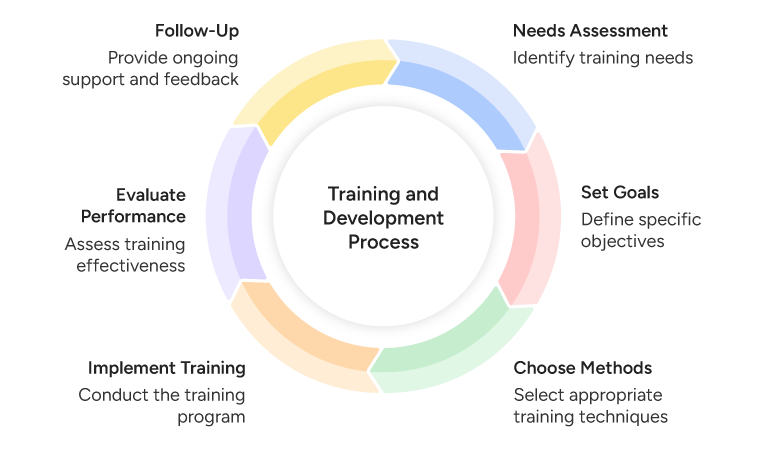
When implemented strategically, these training and development steps provide a structured approach to the employee learning cycle.
Needs Assessment
HR processes for employee training and development identify skill gaps within the organization and determine the training employees require. The process involves collecting information through surveys, discussions, and other methods to identify areas for improvement and set clear training goals.
Set Specific Goals and Objectives
Once training needs are identified, companies should align goals with organizational objectives and set measurable targets for the training program. For example, the goals could be to improve customer service skills, improve leadership capabilities, or increase technical proficiency.
Decide on Training Methods
Organizations should select training methods (in-person, online, or on-the-job training) based on required skills, available resources, and employee needs. Rotational training can also be considered to expose employees to different roles.
Implement the Training Program
The implementation phase includes planning and executing the training program. It incorporates developing training materials, designing the curriculum, scheduling training sessions, securing necessary resources, and ensuring effective communication and coordination with the participants.
Evaluate the Output and Performance
Evaluating performance outputs using surveys, tests, and performance reviews assesses whether the training achieved its goals and improved employee performance.
Follow-Up
Follow-up ensures employees apply the skills and knowledge they have acquired through training in their daily work. Regular coaching, refresher sessions, and continuous feedback track progress. Additionally, a training needs analysis highlights the requirement for additional support or new learning to keep pace with changing skill requirements.

Best Practices for Employee Training and Development Programs
Some of these practices deliver the desired outcomes when organizations follow reliable practices:

Train Employees Based on Business Priorities
The concept of training and development revolves around planned organizational efforts that enhance an employee’s capability. It begins by evaluating current employee skills against future requirements. Individual development plans are then aligned with organizational objectives.
Adopt Modern Tech for Training
Modern platforms also offer AI-based insights, cloud accessibility, and mobile learning, allowing employees to learn from any location. A Learning Management System helps organize learning content, track employee progress, and support different formats such as videos, quizzes, and virtual sessions.
Build a Growth-Oriented Culture
When leaders participate in development initiatives, it demonstrates the value of growth. Robust leadership development training programs cultivate managers who can guide teams effectively. A culture that promotes continuous learning strengthens overall performance and prepares the workforce for future challenges.
Track Results and Keep Improving
Regular evaluation identifies the benefits of the training on employee performance and the areas that need improvement. As part of Human Resource Management, organizations can review completion rates, performance changes, and employee and manager feedback.
Create Custom Training Programs for Employees
Customized employee training programs address individual skill levels, learning styles, job needs, and career goals. A recent report on Employee Training by Devlin Peck states that many employees recognize the impact of these training programs; a large majority believe training directly improves their performance, and over 90% say they are less likely to leave when they receive meaningful development opportunities.

Current Trends in Training and Development
Training and development are significant for an organization’s success. As work environments evolve, so do trends in this field. Various current trends shaping the field are:
Digital Learning
Digital learning methods have become dominant post-pandemic, using technologies to deliver engaging learning experiences. This also includes e-learning, virtual classrooms, and mobile learning.
Personalized Training Programs
Personalized employee training programs are created to meet the employees’ preferences. These programs often include coaching, self-directed learning, and personalized learning paths.
Microlearning
Microlearning offers training in concise formats, such as infographics, videos, and quizzes. This approach is designed for employees who prefer to learn on the go and for organizations looking to provide just-in-time learning.
Gamification
Gamification makes training more interactive by turning learning into an engaging, competitive experience. It mainly includes training through elements to make training engaging.
Diversity, Equity, and Inclusion (DEI) Training
Organizations are investing in employee training programs that address bias, inclusive leadership, and cultural competence.
Soft Skills Development
To acquire soft skills, organizations are increasingly investing in experiential learning. Methods, such as role-playing exercises and peer feedback sessions, encourage practical application and deeper engagement.
What are the Best Ways to Measure Employee Performance after Training?
Organizations can measure employee performance after training through:
Continuous Feedback
Continuous feedback helps organizations assess the success of the training program. Managers can hold regular meetings to determine if the knowledge and skills acquired through training support employees in their everyday tasks. Through feedback, the manager can track progress, challenges, and improvements that support better performance and continuous learning.
OKRs
OKRs help measure employee performance after training by setting clear goals and expected results. It is also vital for organizations to understand the differences between OKRs and performance management to track goals clearly and manage employee performance effectively.
360-Degree Reviews
360-degree employee reviews identify strengths and areas that need improvement through feedback from peers, managers, and other colleagues. The 360-degree feedback approach provides a complete overview of an employee’s performance and supports transparency by combining multiple perspectives.

How Training and Development Will Change by 2026
AI-driven technology, changing workforce dynamics, and evolving business requirements are set to redefine the future of training and development in India.
AI and Automation
AI-driven tools tailor learning to each employee, suggest relevant modules, and manage routine administrative tasks. With AI in performance management, it becomes easier for HR to review performance and plan employee development effectively.
Immersive Learning Technologies
Learning will become more interactive and realistic with technological advancements. Virtual reality will create hands-on learning experiences that replicate real-world work situations. Employees can apply these skills confidently before performing day-to-day operations.
Microlearning with Smart Learning Systems
Short and focused learning will become the norm, improving efficiency and keeping learners engaged without overwhelming them. It will deliver small, easy-to-understand lessons that can be incorporated into daily routines. Employees will receive personalized modules based on their progress with smart learning systems.
Intelligent Performance Support
Intelligent systems will provide real-time support by offering guidance, suggestions, or reminders during tasks. The need for repeated formal training sessions will reduce as these systems will help employees apply their training immediately, solve problems quickly, and maintain accuracy.
Sustainable and Inclusive Learning
Organizations will design sustainable, flexible, and accessible learning programs for diverse employee groups. This focus ensures long-term impact and equal access through these learning modules.
Examples of Training and Development in HRM
Here are some of the best examples of training and development in HRM from organizations that truly are setting high standards:
Amazon
Amazon, a successful e-commerce company, has upskilled more than 300,000 of its employees and pledges to continue doing so in 2025 by providing the training needed for high-growth future jobs.
Google’s specially designed program allows employees to teach and learn from one another within their areas of expertise. The company also offers a wide range of programs that incorporate technical skills training, leadership development, and wellness.
Microsoft
Microsoft offers a wide range of development programs, including best leadership training and career advancement workshops. Its annual Hackathon event encourages employees to work together and innovate by developing new ideas and solutions.

Conclusion
Organizations need to implement practical training and development policies to build a skilled, future-ready workforce. Companies widely adopt modern HR software as it centralizes learning data and supports overall business growth through integrated modules, making it suitable for hybrid and remote teams.
Frequently Asked Questions
What are the Key Responsibilities of HR in Training and Development?
HR key responsibilities include identifying skill gaps, planning, and executing training programs to support employee development. They also monitor progress, evaluate results, and ensure training aligns with organizational development.
Why do Organizations Conduct Training and Development Programs?
Organizations conduct these programs to improve employee skills, strengthen performance, support career growth, and meet changing business needs. These programs also help increase engagement, productivity, and retention.
Which Factors Make Training and Development Difficult to Implement?
Budget and time constraints make it difficult to implement training programs. Low employee participation, outdated methods, rapid technological changes, and unclear training goals add to these challenges.



Grow your business with factoHR today
Focus on the significant decision-making tasks, transfer all your common repetitive HR tasks to factoHR and see the things falling into their place.