
25+ Final Round Interview Questions and Answers

Table of Contents

What if one wrong answer in the final round costs you a 6-figure salary? This is why it is important to know the interview questions that might be asked. At this stage, senior leaders evaluate whether candidates align with the company’s values, goals, and work environment.
This guide helps HRs to evaluate candidates more sharply and helps applicants answer final interview questions more effectively with 25+ proven final round questions, samples, and strategies.
Key Takeaways
- Final round interviews check how well the candidate matches the company’s values.
- HR looks at the candidate’s long-term potential and future growth.
- Decision-making, accountability, and pressure handling matter a lot.
- Final-round checklist to keep the evaluation consistent.
- Watch for red flags during the final interview.

What is a Final Round Interview?
A final-round interview is the last step in the hiring process. This round is usually conducted by senior leaders such as the Hiring Manager, HR Head, or Founder. They analyze cultural fit, long-term potential, and alignment with the company. Success depends on showing genuine interest, confidence, and a good overall fit for the role and organization.
Most Commonly Asked Questions in the Final Round Interview
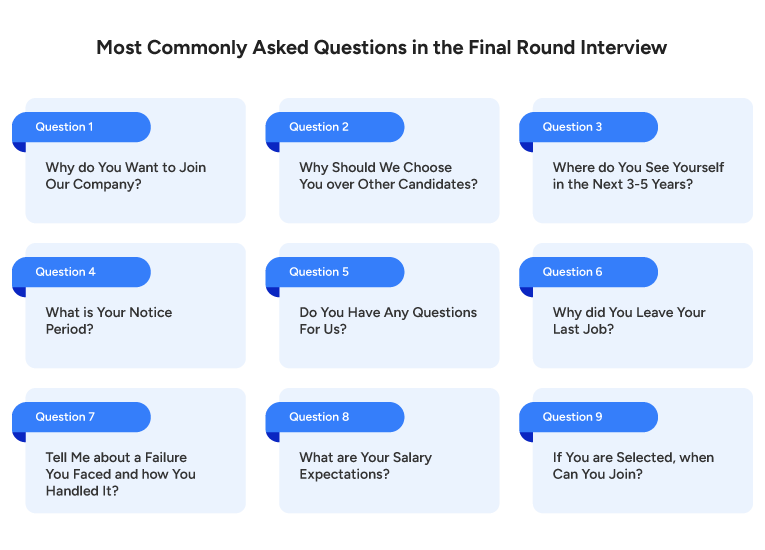
1. Why do You Want to Join Our Company?
Why They Ask: To evaluate your genuine interest in their company, interviewers check whether you’ve researched the organization and whether your goals align with its mission.
How to Answer: Show that you understand the company’s values, work, or achievements. Explain how they align with your skills, interests, and career goals.
Sample Answer: I want to join your company because of its innovative work in sustainable technology, which aligns perfectly with my passion for green engineering. I appreciate your collaborative culture, which provides an ideal environment for professional growth and allows me to work on impactful projects with a supportive team.
2. Why did You Leave Your Last Job?
Why They Ask: To see if you are reliable, positive about past roles, and looking for growth, a better fit, or new opportunities.
How to Answer: Be honest but positive. Focus on career growth, learning, or finding a role that better matches your skills and goals.
Sample Answer: I left my last job because the company downsized my team, and I wanted new challenges to grow my skills. It was a great learning experience, and I am excited for this opportunity.
3. What do You Know about Our Company?
Why They Ask: To check if you have researched the company, its values, and its products, and are truly interested in the job, not just any paycheck.
How to Answer: Share 2-3 key facts about the company and connect them to your skills, experience, or career goals.
Sample Answer: Your company leads in tech innovation, founded in 2010, with top products like AI tools. I admire your focus on sustainability, and my coding skills can contribute to your mission.
4. Why Should We Choose You over Other Candidates?
Why They Ask: To see what makes you stand out, your strengths, and why you’re the best fit for the job.
How to Answer: Highlight your skills, experience, and qualities that align with the role, show enthusiasm, and explain how you can add value to the team.
Sample Answer: I feel I’m a good fit for this role because I have 3 years of hands-on project management experience. I’m comfortable leading teams, managing deadlines, and keeping everyone aligned on priorities. I enjoy solving problems quickly and making sure projects move smoothly. I’d love the chance to bring that experience to your team and support your goals.
5. What Motivates You at Work beyond Salary?
Why They Ask: To understand if you’ll stay engaged and productive for reasons other than money, like motivation for the work or team success.
How to Answer: Share about real motivating factors like learning, growth, teamwork, challenges, or making a meaningful impact that inspire you to do your best.
Sample Answer: I’m motivated by opportunities to learn new skills and grow, work on challenging projects, and contribute to something meaningful. Being part of a team that drives positive change keeps me engaged and excited to give my best.
6. Tell Me about a Failure You Faced and how You Handled It
Why They Ask: To assess your resilience, ability to learn from mistakes, take responsibility, problem-solving skills, and the capacity to grow without blaming others.
How to Answer: Briefly describe the situation, explain what you did, the outcome, and highlight what you learned.
Sample Answer: In my previous job, I missed a project deadline because I underestimated the time required for testing. I reorganized priorities, communicated with my team, and worked overtime to ensure the project was delivered on time and of better quality. From this, I learned to plan better and ask for help when needed, which improved my time management.
7. Have You Ever Made a Wrong Decision at Work? What did You Learn?
Why They Ask: To assess your self-awareness, honesty, and ability to reflect on mistakes and turn them into positive lessons.
How to Answer: Be honest about a mistake, describe how you fixed it, share the outcome, highlight what you learned, and finish on a positive note.
Sample Answer: Yes, I once made a wrong decision at work by approving a rushed project deadline without checking available resources, which caused delays. I learned to evaluate team capacity first and now use checklists to prevent overload. This has improved both my planning and delivery success.
8. Describe a Time You Took Responsibility beyond Your Role
Why They Ask: To see if you are proactive, a team player, and can step up when needed without being asked, showing leadership potential.
How to Answer: Briefly describe the situation, explain what extra responsibility you took, and highlight the positive outcome.
Sample Answer: In my last job as a junior developer, our teammate was out sick during a tight deadline for a client app update. I volunteered to handle part of their workload in addition to my own tasks and completed it two days early. This saved the project and earned the team praise from the client.
9. How do You Make Decisions when Information is Limited?
Why They Ask: To see if you stay calm under pressure, use good judgment, and make effective decisions with incomplete data.
How to Answer: Describe how you collect information, assess risks, and adjust when things are uncertain.
Sample Answer: When information is limited, I collect relevant data, consult with teammates or experts if possible, and consider potential risks and options. I make a quick, thoughtful decision and stay flexible to adjust if new information emerges. This ensures progress without unnecessary delays.
10. Tell Me about a Tough Decision You Made under Pressure
Why They Ask: To see how you handle stress, think quickly, and make smart choices when time is short and the stakes are high.
How to Answer: Briefly describe the high-pressure situation, explain the options you considered, the decision you made under pressure, and the outcome.
Sample Answer: During a project with a tight deadline, an important task fell behind schedule. I had to quickly decide whether to ask for more time or share the workload with others. I reorganized the team’s tasks, prioritized, and we delivered on time. This taught me to stay calm and make quick decisions under pressure.

Final Round Interview Questions on Leadership
11. How do You Handle Conflict within a Team?
Why They Ask: To check if you can stay calm, communicate well, and resolve issues without disrupting teamwork.
How to Answer: Explain how you listen to all sides, focus on the issue (not the person), find common goals, and work toward a fair solution.
Sample Answer: When conflict arises, I listen to everyone involved to understand their perspectives. I stay calm, focus on the problem over personal differences, and guide the team toward our shared goals while encouraging open communication. This usually helps the team find a solution and move forward together.
12. Have You Ever Mentored or Guided Someone at Work?
Why They Ask: To see if you can share knowledge, support, and develop others, which shows leadership skills and teamwork.
How to Answer: Briefly describe who you mentored, how you helped them, the positive outcome, and what you learned.
Sample Answer: Yes, I mentored a new HR associate on using our HR systems and managing key processes. Within a few months, they were handling tasks independently, and it improved team efficiency. I find mentoring very rewarding because it helps others grow while strengthening team performance.
13. How do You Influence Others without Authority?
Why They Ask: To see if you can persuade and lead teams without authority, and to test your soft skills like communication and relationship-building.
How to Answer: Explain the situation, describe how you built trust or used data or empathy to influence others, listened to their perspectives, and share the outcome.
Sample Answer: I influence others by listening to their concerns and understanding what matters to them. I explain my ideas clearly, use facts or examples, and focus on shared goals. This helps build trust and encourages collaboration.
14. What does Good Leadership Mean to You?
Why They Ask: To check your leadership values, how you view teamwork, and whether your approach aligns with the team and company culture.
How to Answer: Explain what leadership means to you, give key qualities you value, and briefly mention how you practice them at work.
Sample Answer: Good leadership means setting a clear direction, supporting the team, and leading by example. A good leader listens, communicates openly, and helps others succeed. For me, it’s like a coach who listens, motivates, and steps up during tough times.
15. Cultural Fit and Value-Based Interview Questions
What Kind of Work Culture Helps You Perform Your Best?
Why They Ask: To see if your preferred work environment matches the company’s environment and if you will be a cultural fit and stay motivated.
How to Answer: Describe the atmosphere that brings out your best performance, like open communication or flexibility, and connect these to better results without criticizing past jobs.
Sample Answer: The culture that helps me perform best includes work-life balance, collaboration, and open communication in a supportive environment. I like teams that share ideas, give feedback, and trust each other to take ownership of their work. This helps me stay motivated and deliver high-quality results.
16. How do You Align with Our Company Values?
Why They Ask: To see if your beliefs and work style align with the company’s core principles, ensuring you fit in and stay motivated.
How to Answer: Research the company’s values beforehand, then explain 1-2 that resonate with you, and give a brief example.
Sample Answer: I align with your company’s values of collaboration and innovation. In my previous role, I shared ideas with teammates to improve processes and encouraged creative problem-solving that cut project time. This helped the team work efficiently while fostering a positive, innovative environment.
17. How do You Handle Ethical Challenges at Work?
Why They Ask: To see if you have integrity, make responsible decisions, and follow company values without bending rules.
How to Answer: Explain how you identify the problem, check rules, consider the impact on others, and take action.
Sample Answer: To handle an ethical challenge at work, I analyze the situation and review company policies. If I’m unsure, I consult my manager or HR. I ensure my actions are fair, transparent, and respectful. For example, when I noticed a billing error, I reported it and worked with the team to resolve it immediately.
18. What does Professionalism Mean to You?
Why They Ask: To see if you understand workplace expectations like reliability, respect, accountability, and high standards.
How to Answer: Explain what professionalism means to you with 2-3 key traits, then give a brief example of how you show it at work.
Sample Answer: To me, professionalism means being reliable, respectful, and accountable for my work. I show it by meeting deadlines, communicating clearly, and treating colleagues with respect. For example, I once stayed late to fix a project error so we delivered on time.
Best Questions to Ask HR in the Final Round
- What Growth and Career Development Opportunities are Available?
- Can You Explain the Team Structure and Reporting Process?
- How Will My Performance be Measured Initially?
- How does the Company Support Work-Life Balance?
- How does the Team Usually Communicate and Collaborate?
Interview Questions on Career Plans and Long-Term Fit
19. Where do You See Yourself in the Next 3–5 Years?
Why They Ask: To understand candidates’ aspirations, evaluate alignment with the company’s values, and assess their long-term commitment.
How to Answer: Discuss realistic professional goals that show growth, learning, and contribution to the company. Avoid personal or unrelated ambitions.
Sample Answer: In the next 3–5 years, I see myself taking on more responsibility in HR management, leading projects, and improving processes such as recruitment, onboarding, and performance management. I aim to develop my skills in HR technologies and help create a more efficient, supportive workplace.
20. How does this Role Fit into Your Future Plans?
Why They Ask: To see if your career goals align with the role and whether you are likely to grow and stay with the company long term.
How to Answer: Align the role with your short- and long-term goals, and demonstrate your research on the company. Highlight the skills you’ll develop and the contributions you’ll make to their success.
Sample Answer: This role aligns with my future plans because it allows me to use my HR experience, take on new challenges, and work on important projects. I want to improve my skills in HR technology and contribute to tasks that add positive employee experience. This position fits well with the company’s mission and values.

21. What Kind of Growth are You Expecting from Us?
Why They Ask: To understand your expectations for development and whether the company can realistically support your career goals.
How to Answer: Focus on professional growth, like learning opportunities, skill development, exposure to responsibilities, and career progression. Show flexibility and emphasize mutual growth.
Sample Answer: I am looking to grow into a leadership role here by mastering this position first and taking on additional responsibilities. I admire your company’s innovative projects and see myself contributing to them in the long term while growing professionally.
22. How do You Handle High-Pressure Situations?
Why They Ask: To look for resilience, problem-solving skills, and emotional stability when you face tight deadlines, unexpected challenges, or stressful situations.
How to Answer: Describe how you manage stress, prioritize your tasks, and stay organized. If possible, give a brief example from your own experience of successfully handling pressure.
Sample Answer: In high-pressure situations, I stay organized, break tasks into smaller milestones, and set clear priorities. For instance, as a project manager on a tight-deadline project, I prioritized tasks, coordinated with my team, stayed focused, and completed all tasks on time despite unexpected changes.
23. Describe a Time when Things did Not Go as Planned. What did You do?
Why They Ask: To see your critical thinking, flexibility in tough situations, and ability to turn challenges into positive results while staying accountable.
How to Answer: Briefly describe the situation and challenge you faced. Explain what you did to address it, and highlight the positive outcome or lesson learned.
Sample Answer: During an HR project, a training session was canceled at the last minute due to the speaker’s unavailability. I worked with the team to arrange an alternative facilitator and notified everyone of the changes. I learned the importance of having backup plans and clear communication when things don’t go as expected.
24. How do You Manage Stress during Critical Deadlines?
Why They Ask: To see candidates’ ability to stay calm, focused, and productive under pressure, manage time effectively, and deliver quality work without burning out.
How to Answer: Explain how you manage stress by prioritizing tasks, staying organized, breaking work into steps, and keeping a positive mindset. Give a brief example.
Sample Answer: To manage stress, I stay calm, organized, set clear priorities, break tasks into steps, and use time blocks to stay focused. For example, during a month-end payroll deadline, I made a task list and coordinated with my team. This helped me ensure we met the deadline without compromising quality.
25. Have You Handled an Unhappy Stakeholder or Client? How?
Why They Ask: To evaluate your ability to manage conflict, maintain professionalism, and resolve issues while keeping relationships intact.
How to Answer: Describe the situation, explain the steps you took to address the concern, and highlight the positive outcome or lessons learned. Focus on listening, empathy, and finding a solution that satisfies both sides.
Sample Answer: Once, a client was frustrated with delays in onboarding new employees. I listened to their concerns, clarified the reasons for the delay, and proposed a revised timeline with regular updates. By keeping them informed and addressing their concerns promptly, we resolved the issue, and the client appreciated our proactive communication.
Not Sure What to Include in a Job Description?
We’Ve Got 50+ Role-Based Samples Ready for You.
Interview Questions on Joining Date and Salary Expectations
26. What are Your Salary Expectations?
Why They Ask: To understand whether candidates value themselves appropriately based on market trends and how flexible and confident they are during compensation discussions.
How to Answer: Provide a salary range based on your experience and market research, and show flexibility if open to discussion. Focus on your interest in the role and on the growth opportunities it offers.
Sample Answer: Based on what I’ve learned about this role and my experience, I’m looking for a salary between [X] and [Y]. I’m open to a discussion and particularly interested in the growth and learning opportunities this role offers.
27. What is Your Current CTC?
Why They Ask: To understand your current compensation and how it fits their budget and the role’s salary range, this also helps them make a fair and realistic offer.
How to Answer: Be honest and clear about your CTC. State your current CTC and briefly mention any variable components, if applicable.
Sample Answer: My current CTC is ₹X per annum, with a base of ₹Y, performance bonuses of ₹Z, and benefits like PF, HRA, and health insurance. I’m excited about this opportunity and open to discussing a compensation structure that fits the role, responsibilities, and growth opportunities.
28. What is Your Notice Period?
Why They Ask: To plan when the candidate can join, this helps companies organize hiring and manage team or project needs.
How to Answer: Be clear about how long your notice period is and show that you are committed to a smooth handover. If you might be able to leave earlier, mention that as well.
Sample Answer: My notice period is X days according to my contract, which provides enough time for a proper handover. I am also open to discussing an earlier start if my manager agrees.

29. If You are Selected, when Can You Join?
Why They Ask: To determine your availability and expected joining timeline to ensure effective onboarding and planning, with no conflicts or delays in filling the position.
How to Answer: Clearly state your earliest possible joining date based on your notice period or commitments, and express flexibility and enthusiasm while remaining professional.
Sample Answer: I have a X-day notice period, but I may be able to start sooner if required. I’m excited about this opportunity and could be available as early as next month.
30. Final Discussion and Closing Interview Questions to Ask
Do You have any Questions for Us?
Why They Ask: To see if you’re genuinely interested in the role and the company, good questions show your preparation, curiosity, and critical thinking skills.
How to Answer: Ask thoughtful, research-based questions about the role, team, company culture, growth opportunities, or upcoming projects. Avoid basics like salary; focus on growth and contributions.
Sample Answer: Yes, what are the team’s top priorities this year, and how does this role support them? What are the biggest challenges or priorities for this position in the next 6–12 months? How does the company support employee growth and professional development?
31. What are Your Expectations from this Role and the Company?
Why They Ask: To see if your career goals and motivations match the role and company culture, and if you focus on growth and contribution instead of just compensation.
How to Answer: Research the job description and the company’s values, align your skills with their requirements, and highlight growth opportunities. Stay positive and flexible, focusing on mutual benefits without demanding specifics like salary.
Sample Answer: I am looking forward to using my skills in (relevant area) to help the team succeed and support the company’s goals. I am eager to join a collaborative workplace where I can grow professionally and take on challenges that match my career interests.
32. If We Extend an Offer, are You Comfortable Accepting It?
Why They Ask: To assess your interest in the role, your enthusiasm, and commitment, it helps assess if you’re seriously interested or just exploring options.
How to Answer: Express enthusiasm for the role while remaining realistic. You can confirm your interest, but avoid committing before you know all the details (like joining terms or compensation).
Sample Answer: Yes, I’m very much interested in this role and excited about the opportunity. I look forward to reviewing the offer details, and I’m confident it would be a great fit for both the company and me.
Warning Signs HR Should Look for in the Final Round
- No-Questions-Asked: Candidates who ask nothing about the role, team, company, or next steps may not be interested in the role or the company.
- Too Casual or Arrogant: Getting overly informal, especially with the CEO or senior leaders, shows poor professionalism, even if earlier chats were friendly.
- Behavior Changes: A big difference in how they act from the first to the final interview suggests their true personality may not be genuine.
- Last-Minute Surprises: Sharing new limits (such as leaving early every day) or changing salary expectations only in the final interview shows poor planning and transparency.
- Lack of Enthusiasm: A lack of energy or enthusiasm may indicate they are using the interview as a backup or having second thoughts.
Checklist to Prepare for the Final Round Interview for the Candidate
Final-round interviews with senior leaders to assess cultural fit can be best navigated with a checklist to ensure you align with the role, team, and company. Prepare for the final round interview as thoroughly as you did for earlier rounds.
- Learn the company’s goals, what they believe in, what the job involves, the skills they want, and their work environment.
- Review your job description, align your skills with the qualifications, and prepare examples that highlight your impact.
- Prepare STAR examples (Situation, Task, Action, Result) that show the top skills and qualities relevant to the position.
- Practice common final round interview questions and answers to behavior questions (e.g., “Tell me about a time…”) and cultural fit questions.
- Cover how you handle stress, tough challenges, and practical stuff like salary, notice period, and joining date.
- Come up with 3-5 smart questions about the team, top job priorities, growth opportunities, and company culture.
Read More Interview Questions with Sample Answer


Grow your business with factoHR today
Focus on the significant decision-making tasks, transfer all your common repetitive HR tasks to factoHR and see the things falling into their place.

© 2026 Copyright factoHR