
Non-Retaliation Policy for Employers Template
Download Non-Retaliation Policy PDF Format For Free

Table of Contents

Key Takeaways:
- What is the policy of non-retaliation?
- Ready to use the non-retaliation policy template
- Importance of following a non-retaliation policy in the organization
- Practical tips to build a transparent and compliant policy
A non-retaliation policy is one of the most important safeguards a company can offer its employees. When people feel safe speaking up, workplace culture improves, and legal risks are reduced. This article includes a ready-to-use template of a non-retaliation policy for employers, explains why this policy is essential, and highlights the consequences of not having one. You will also find practical tips to help you write a simple, compliant, and easy-to-understand policy for your team.
Non-Retaliation Policy Template
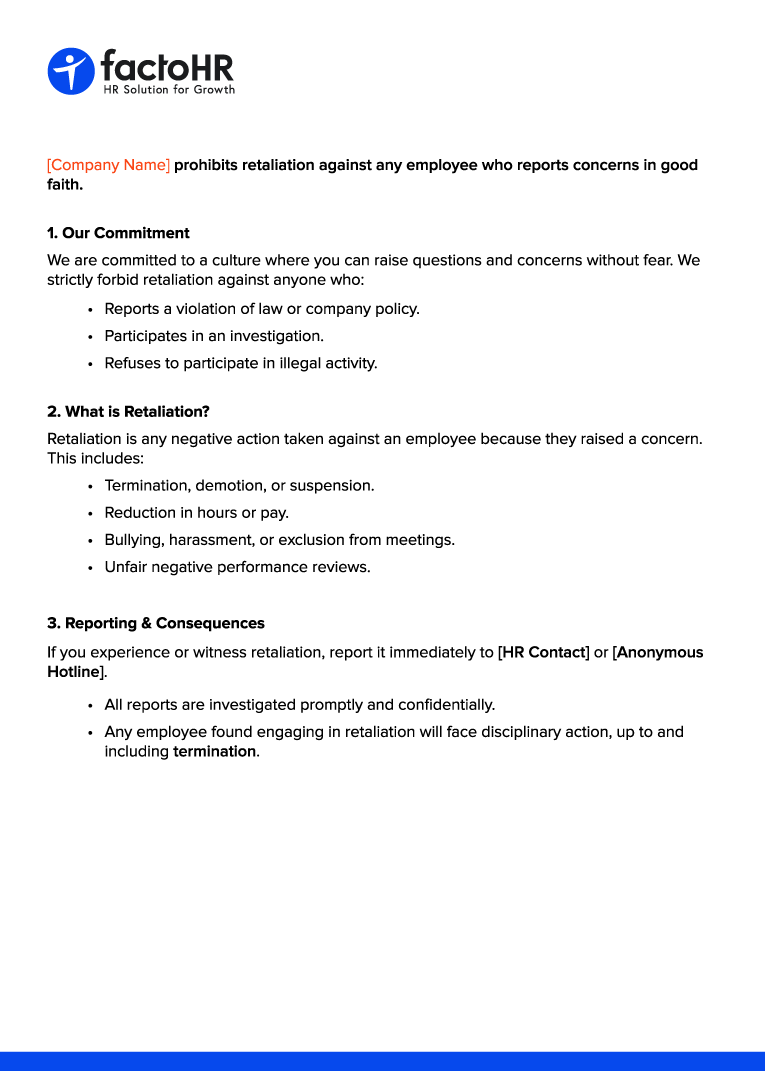
Policy Brief & Purpose
At [Company Name], we believe that trust is the foundation of our success. We want to build a culture where employees feel safe reporting harmful, unethical, or discriminatory behavior. Our goal is to ensure that no employee fears punishment or mistreatment for raising genuine concerns. This policy ensures we comply with applicable laws and maintain a transparent, ethical culture.
Scope
This policy applies to all individuals connected to [Company Name], including full-time and part-time employees, contractors, interns, prospective employees, and former employees.
What We Consider Retaliation
Retaliation is defined as any adverse action taken against an individual because they engaged in a protected activity. Adverse actions include, but are not limited to:
- Termination or demotion
- Salary reduction or denial of bonuses
- Unfair performance evaluations
- Exclusion from meetings or work activities
- Harassment, bullying, or intimidation
- Giving a negative reference to a future employer without cause
Protected Activities
Employees are protected when they:
- Report discrimination, harassment, or safety violations.
- Participate in an internal or external investigation.
- Request legally protected leave (e.g., FMLA, parental leave).
- File a complaint with external legal bodies or regulatory authorities.
Reporting Procedures
If you believe you have been retaliated against, or if you witness retaliation, you should report it immediately.
- Internal: Speak to your Manager or contact the HR Department at [Email/Phone].
- Anonymous: Reports may be submitted anonymously via [Link/Hotline].
We know that coming forward can be difficult, but please know that our door is always open.
Disciplinary Consequences
[Company Name] takes retaliation seriously. Any employee found to have engaged in retaliation will face consequences as outlined in our disciplinary action policy template, up to and including termination of employment.
Good Faith Requirement
This policy protects employees who report concerns in good faith meaning the employee honestly believes a violation occurred. Employees who knowingly file false or malicious reports may face disciplinary action.

Why do We Need a Non-Retaliation Policy?
A non-retaliation policy is designed to ensure that an organization and its employees comply with all laws prohibiting retaliation. This policy protects anyone who raises a good-faith complaint about inappropriate or unlawful behavior by an employer, manager, or co-worker.
The purpose is to make current and former employees feel safe while raising concerns. They should be able to share concerns without worrying about punishment or negative treatment.
Under this policy, no adverse action may be taken against an employee who reports, complains about, or helps investigate a possible violation of:
- Company policies
- The company’s code of conduct
- Any applicable law
The only exception is when a complaint is proven to be intentionally false or made with malicious intent.
Tips for Constructing an Effective Non-Retaliation Policy
Building a strong non-retaliation policy helps your company prevent harmful behavior and protect employees. Here are some practical tips to create a clear and effective policy:
Write the Policy in Clear, Simple Language
Draft the policy in clear and straightforward language that is easy for all employees to understand. Try to avoid legal jargon and complicated sentences. Instead, use simple words and organize the content well by highlighting important terms to improve clarity and comprehension.
Include the Policy in Your Employee Handbook
Add the non-retaliation policy to the employee handbook so everyone can refer to it whenever needed. You may also include a signature page where employees confirm that they understand the policy, agree to follow it, and are aware of the consequences of violating it.
Explain how Employees Can Report Retaliation
Your policy should guide employees on what to do if they experience or witness retaliation. Provide clear reporting options, including HR contact details, phone numbers, email addresses, and online reporting systems. You can also include links to external resources if needed.
Consult with a Lawyer
Before finalizing the policy, have a lawyer review it to ensure it complies with all local, state, and federal laws. Legal review helps you use the correct language, avoid mistakes, and keep your company protected.
Offer Mandatory Training on the Policy
It’s essential to train employees on how to use the policy to their advantage. They should understand retaliation, its consequences, and how the policy protects them. The training will also educate them on which behaviors are prohibited and help reduce the risk of future legal issues.
Keep Proper Documentation
If it comes to a situation where retaliation occurs or is suspected, document everything carefully. Comprehensive documentation will help you take fair disciplinary action and provide proof if you need to justify your decisions later, especially when dealing with severe or repeated incidents.
Explore Other Important HR Policies

Frequently Asked Questions
What is a Non-Retaliation Policy in the Workplace?
A non-retaliation policy protects employees from retaliation or adverse treatment when they report misconduct, raise concerns, or participate in workplace investigations.
What is an Example of a no Retaliation Policy?
A policy stating that an employee will not face termination, demotion, isolation, or unfair evaluations for reporting harassment or unsafe practices is an example of a non-retaliation policy.
What Should a No-Retaliation Policy Include?
It should clearly explain what retaliation is, how employees are protected, how to report issues, the consequences for retaliators, and how complaints will be investigated.
How are Reports Kept Confidential?
Reports are handled only by authorized individuals, and information is shared strictly on a need-to-know basis to protect the employee’s privacy as much as possible.
What Happens if an Employee Faces Disciplinary Action Unrelated to Their Report?
The company must provide written proof that the disciplinary action is based on separate misconduct and not connected to the employee’s complaint.
What to Add to Non-Retaliation Policies?
Add clear reporting methods, legal compliance statements, definitions of retaliation, examples of protected behaviors, and steps the company will take to investigate complaints.
What Not to Add to Non-Retaliation Policies?
Avoid vague language, legal jargon, and complicated rules that make the policy hard to understand. Also, avoid statements that could accidentally limit employee rights or violate legal standards.
What Behaviors are Protected from Retaliation?
Reporting harassment, discrimination, safety issues, illegal actions, policy violations, or unethical behavior, as well as participating in related investigations, are all protected.
Can I Allow My Employees to Report Misconduct Anonymously?
Yes. Many companies allow anonymous reporting through hotlines, email, or third-party systems, as long as the process still protects confidentiality and encourages honest communication.
Disclaimer
This policy template offers general guidance and is intended for reference purposes only. It may not cover all applicable local, state, or federal laws and should not be considered a legal document. The author and factoHR assume no legal responsibility for any outcomes resulting from the use of this policy.


Transform your HR operations with factoHR today
Choose a perfect plan satisfying your business demands and let factoHR handle all your HR’s tasks efficiently.

© 2026 Copyright factoHR