
Recruitment Marketing: How to Attract & Engage Top Talent
Table of Contents

Recruitment marketing applies marketing principles to attract, engage, and nurture both active and passive job applicants. It promotes an organization’s employer brand through channels like social media, blogs, and career sites.
In today’s competitive job market, merely posting vacancies is insufficient; companies must actively communicate their culture and growth opportunities to build a strong talent pipeline. This article explores what recruitment marketing is, why it matters, and how organizations can master it to stand out in a crowded talent landscape.
Key Takeaways
- Purpose-driven and authentic: Recruitment marketing should communicate the organization’s core values and mission to attract candidates who genuinely connect with its purpose.
- Candidate-centric approach: Focus on understanding and addressing the motivations, needs, and aspirations of potential candidates throughout their journey.
- Consistent brand narrative: Ensure all messaging across digital platforms, job postings, and social media reflects a unified employer brand image.
- Data-informed strategy: Use insights from analytics and talent metrics to refine messaging, channel selection, and campaign performance.
- Seamless digital experience: Use data and technology (including AI tools) to personalize communication, screen candidates efficiently, and continuously improve your recruitment marketing strategy.
- Continuous communication: Recruitment marketing nurtures relationships with potential hires even before job openings arise, ensuring a stronger talent pipeline.
- Collaboration between HR and marketing: Align both teams to create impactful campaigns that combine creative messaging with strategic recruitment goals.
- Long-term value creation: Beyond filling positions, recruitment marketing builds a reputation that attracts, engages, and retains talent over time.

What is Recruitment Marketing?
Recruitment marketing is a proactive, relationship-driven strategy that uses marketing techniques to attract, engage, and nurture potential candidates before and throughout the hiring process. Unlike traditional recruitment, which relies mainly on posting jobs and waiting for applicants, recruitment marketing focuses on building relationships, promoting employer branding, and creating a positive candidate experience.
In 2026, it’s more crucial than ever as organizations compete for talent in a hybrid and remote setup, where candidates research employers online, value company culture, and expect seamless, engaging experiences.
Recruitment marketing using social media, content marketing, job ads, and career events to attract diverse talent and ensure the right people are ready when needed.
Why Recruitment Marketing Matters?
Recruitment marketing matters because it helps employers make better hires, hire faster, and build a stronger employer brand. Companies attract significantly more qualified applicants and reduce time-to-fill by engaging candidates early with targeted messaging and a clear brand.
This leads to more accurate hires, higher employee retention, and lower recruitment costs. A positive candidate experience improves the company’s image, helping attract top talent and satisfied customers. Overall, recruitment marketing accelerates hiring, improves hire quality, and elevates employer brand perception with measurable impact.
Key Aspects of Recruitment Marketing
Employer Branding
Employer branding shapes how candidates view your company by clearly communicating your mission, values, culture, and what makes you an employer of choice. It starts with a strong Employee Value Proposition (EVP) that reflects your real workplace experience and is promoted through channels like social media, career sites, and employee stories.
Candidate Personas
Candidate personas are detailed profiles of ideal hires that describe the essential skills, personality traits, and goals. These personas should be created using real data and insights from key stakeholders to avoid bias and ensure accuracy. Well-constructed personas align recruitment efforts across teams, enabling more focused and effective recruitment marketing that resonates with the right candidates.
Content Marketing
Content marketing uses blogs, videos, and social media to highlight company values, showcase employee experiences, and share industry insights. Regular, authentic content helps attract candidates and strengthen the employer brand.
Social Recruiting
Social recruiting uses social media platforms like LinkedIn, Twitter, and Instagram to showcase a company’s culture, values, and job opportunities. Engaging posts, campaigns, and authentic interactions increase visibility, attract top talent, and connect with both active and passive candidates.
Employee Advocacy
Employee Advocacy plays an important role in attracting new talent by sharing authentic insights and experiences about their workplace. Their stories, testimonials, and social media posts create trust and showcase the company culture, strengthening the employer brand.
Recruitment Technology
Recruitment technology, including Applicant Tracking System (ATS), Customer Relationship Management (CRM), and AI tools, simplifies the recruitment process by automating tasks and improving candidate engagement. These tools help organizations manage applications efficiently, identify top talent faster, and improve overall recruitment strategies.

The Recruitment Marketing Funnel
The recruitment marketing funnel is a strategic framework that guides potential candidates from initial awareness of a company to applying for a job, focusing on marketing tactics to attract and engage talent before the hiring process begins. It has four key stages:
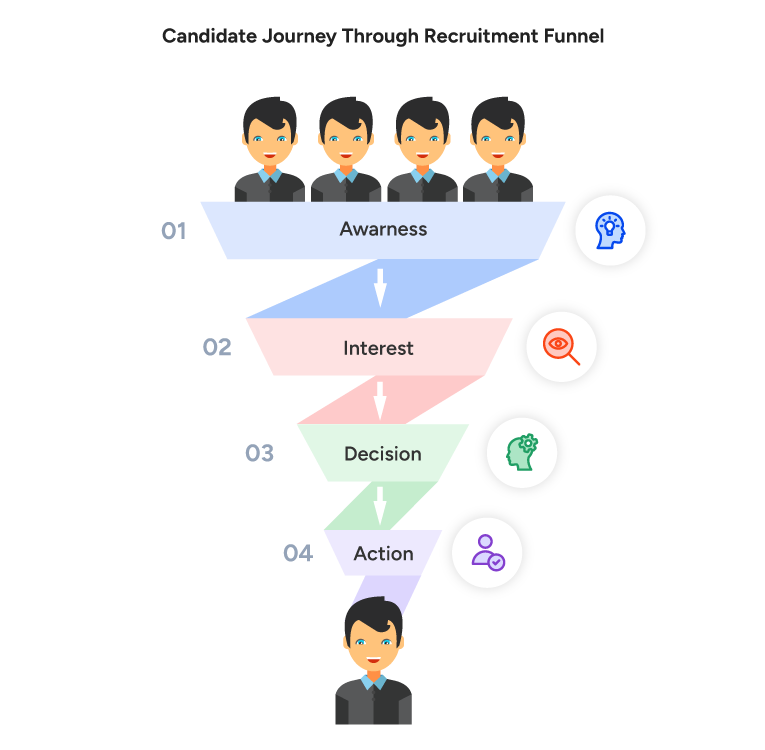
Awareness
At the top of the funnel, the goal is to make candidates aware of your employer brand and open roles by promoting your company culture and open roles across job boards, social media, and other online channels. This stage targets both active and passive candidates to expand reach.
Interest
Once awareness is established, deepen candidate engagement by sharing genuine content such as employee testimonials and company values that showcase a positive work environment and appeal to candidates’ aspirations.
Decision
In this phase, recruiters nurture candidate interest by providing relevant and detailed information about the job, benefits, growth opportunities, and the hiring process to help candidates make informed decisions.
Action
The final recruitment marketing stage prompts candidates to apply for a role through a simplified, user-friendly application process that minimizes friction and encourages completion.
This funnel systematizes the journey from brand exposure to application, aligning marketing tactics and candidate experience. This optimizes recruitment outcomes before candidates enter the typical funnel stages of screening, interviewing, and hiring.
Using a recruitment marketing funnel helps organizations attract more qualified candidates, improve the candidate experience, reduce time-to-hire, and strengthen their employer brand. It also provides data and insights to continuously optimize recruitment strategies.

What are the Recruitment Marketing Strategies that Work?
Optimize Your Career Page
The career page is often the first interaction candidates have with an employer brand, so it must be clear, engaging, and designed to convert visitors into applicants.
Tips for an Effective Career Page:
- Showcase your Employee Value Proposition (EVP) prominently: Clearly and simply communicate what sets your company apart.
- Incorporate compelling visuals: Use photos, short videos, and authentic team testimonials to portray your company culture vividly.
- Improve search and navigation: Enable candidates to easily filter job opportunities by location, department, or job type.
- Add social proof: Highlight awards, employee success stories, and ratings from review sites to build trust.
- Design for mobile-first: Since most candidates browse jobs on their phones, prioritize mobile usability.
Example:
A tech company, for instance, features a ‘Day in the Life’ video and an interactive office tour on its careers page, which boosts time on page and increases application completion.
Leverage Social Media
Social Media platforms offer practical ways to connect with both active and passive candidates.
Platform-Specific Strategies:
- LinkedIn: Share job openings, thought leadership content, employee spotlights, and behind-the-scenes glimpses. Use LinkedIn Recruiter and sponsored ads for targeted outreach.
- Instagram: Highlight company culture through reels, photos, team events, and behind-the-scenes employee spotlights, focusing on authenticity.
- TikTok: Use creative, short videos to showcase workplace humor, career tips, and advice, ideal for attracting Gen Z candidates.
- Facebook: Promote job vacancies and events, and engage with relevant industry groups or communities.
- X (Twitter): Participate in industry talks, share company updates, and accomplishments.
Create Engaging Content
Content marketing helps establish credibility and an emotional connection before candidates even apply.
- Blogs: Share stories about career growth, core values, employee experiences, and expert insights.
- Videos: Feature day-in-the-life stories, office tours, leadership messages, and highlights of projects.
- Webinars / Live Q&A: Host interactive sessions around interview advice, industry trends, or meet-the-team panels.
Use Data & Analytics
Using data in your recruitment marketing makes your efforts more effective and cost-efficient.
Key Metrics to Monitor:
- Source of Hire: Track which channels yield the best candidates.
- Candidate Engagement: Measure click-through rates, page dwell time, and video views.
- Conversion Rates: Monitor progress from job ad to application, interview, and hire.
- Cost per Applicant/hire: Optimize budget allocation.
- Pipeline Health: Analyze application volume and quality over time.
Improvement Tactics:
- A/B test job titles, descriptions, and ads.
- Allocate budget to top-performing channels.
- Use heatmaps to identify where candidates drop off on your career page.
- Refine messaging based on engagement analytics.
Build Talent Communities
Maintain contact with individuals before they apply. Ways to do this:
- Add a simple form to join your talent network.
- Send newsletters with job news and events.
- Host online meetups or workshops.
- Use tools to group candidates by skills or interests.
- Share content for different career stages.
Personalize Candidate Communication
Today’s hiring success depends on connecting with candidates in a human, timely, and personalized way.
- Email: Offer personalized career suggestions, application status updates, and candidate engagement messages.
- Chatbots: Provide immediate responses, guide candidates through the application process, and help schedule interviews.
- SMS/Text: Deliver quick reminders, event invites, and interview confirmations particularly useful for high-volume hiring.

Recruitment Marketing Tools
| Tool Type | How it helps | Examples |
|---|---|---|
| Applicant Tracking System (ATS) | Primarily manages the entire recruitment process from job posting to hire. Modern ATS tools also support career page creation, candidate communications, and talent pool management. | TrackerRMS, Bullhorn, iCIMS, Jobvite, Lever |
| Recruitment CRM Software | Helps recruiters build long-term relationships with candidates, track interactions, segment talent pools, and nurture candidates through personalized campaigns. | Recruit CRM, Beamery, SmartDreamers |
| Content Management System (CMS) | Supports creating, managing, and updating career content on company websites or career pages, ensuring consistent employer branding. | WordPress, Drupal, Joomla |
| Email Marketing | Helps targeted, automated email campaigns to candidates, like job alerts, newsletters, and follow-up sequences, improving engagement and application rates. | Mailchimp, HubSpot, SendinBlue |
| Career Site | Acts as the company’s recruitment hub, showcasing open roles, company culture, employee stories, and employer branding to attract candidates. | Custom-built sites, Careers pages on corporate websites |
| Job Boards | Increases visibility of job openings by posting roles to multiple platforms, helping reach both active and passive candidates. | Indeed, Monster, LinkedIn Jobs, ZipRecruiter |
| Employee Referral Tool | Streamlines referral programs by tracking referrals, automating communication, and rewarding employees for successful hires. | RolePoint, ZALP, Jobvite Employee Referral |
| AI-Powered Recruitment Platforms | Uses AI to improve candidate sourcing, screening, engagement, and personalized communication, helping recruiters to make data-driven decisions. | Eightfold.ai, HireVue, Pymetrics |
| Social Media Management Tools | Helps schedule and manage posts across multiple platforms, track engagement, and promote employer branding to reach a wider candidate audience. | Hootsuite, Buffer, Sprout Social |
Real-World Examples & Case Studies
Here are 3 real-world and case studies of successful recruitment marketing campaigns showcasing what companies did, the results they achieved, and the lessons learned:
Kruidvat: Apply with Your Bestie
Kruidvat targeted Gen Z talent, who made up over 75% of their workforce, by making the job application process social and fun. They created a campaign called “Apply with Your Bestie,” using duo-shirt visuals,
WhatsApp applications, and engaging TikTok content. The campaign was based on research into Gen Z values and behaviors, aligning the messaging and channels with candidate insights.
Results Achieved
Applications increased by 52%, duo applications rose by 83%, and the bounce rate dropped by 8.25%. The company moved from #10 to #3 in favorability among young workers. They received 1,684 applications and made 300 hires with balanced gender representation.
Lessons Learned
Thorough audience research and aligning communication channels and messages with target candidates’ preferences can significantly improve application rates and candidate engagement.
IKEA’s Career Instructions Campaign
IKEA Australia wanted to hire for new stores and targeted their existing shoppers. They created IKEA-style “career instructions” that were included inside flat-pack furniture boxes, so customers literally brought job opportunities into their homes.
Results Achieved
This clever approach generated 4,200 job applications and led to 280 hires.
Lessons Learned
Reaching potential candidates where they already spend time with creative, relevant messaging can significantly increase applicant engagement.
Ogilvy & Mather’s “World’s Greatest Salesman” Campaign
Ogilvy & Mather looked for top sales talent by requiring applicants to create a video selling a brick to the company before applying.
The campaign was promoted with a dramatic and memorable YouTube video.
Results Achieved
The campaign was highly memorable, attracting motivated sales candidates who were serious about the challenge.
Lessons Learned
Setting high entry barriers with creative challenges can attract highly skilled and motivated candidates, making the recruitment process more distinctive and compelling.
These examples demonstrate how innovation, in-depth audience insights, appropriate channel selection, and engaging content are key components of successful recruitment marketing.

Common Mistakes to Avoid
Common Mistakes to Avoid in Recruitment Marketing are:
- Ignoring Mobile Optimization: Failing to optimize recruitment content and applications for mobile devices limits reach and engagement, as many candidates use smartphones for job searches.
- Not Tracking Metrics:Without monitoring key recruitment metrics, organizations miss insights into which strategies are working or lagging, leading to inefficient resource use and missed opportunities to improve hiring.
- Overlooking Candidate Experience: Neglecting it during recruitment can damage the employer brand and reduce candidate engagement, leading to the loss of top talent.
- Using Inconsistent Employer Branding: A lack of consistency across channels confuses candidates and weakens trust, reducing overall recruitment effectiveness.
Future Trends in Recruitment Marketing
- AI and Automation: AI tools and automation help companies save time by screening resumes, matching candidates, and chatbot interactions, improving efficiency and reducing hiring time.
- Video Recruiting: Video interviews and job ads make hiring faster and more engaging, allowing companies to connect with candidates anywhere in the world.
- DEI (Diversity, Equity, & Inclusion) Initiatives: Recruiters are prioritizing inclusive messaging and unbiased hiring practices to reach diverse candidates and build a more inclusive workforce.
- Predictive Analytics: Using data-driven insights, predictive analytics helps forecast hiring requirements, identify top talent, and improve overall recruitment strategies.
Final Words
Recruitment marketing plays a vital role in attracting and retaining top talent in a competitive landscape. Through the use of personalized communication, a well-defined employer brand, and sustained interaction across digital platforms, organizations can cultivate meaningful relationships with active and passive talent.
These strategies boost visibility, create a long-term talent pipeline, and position companies to stand out and hire more effectively. A well-planned recruitment marketing approach not only fills roles efficiently but also strengthens the organization’s reputation as an employer of choice, driving long-term growth and success.
How does Recruitment Marketing Improve Candidate Quality?
By targeting the right audience with tailored messaging and strong employer branding.
Can Recruitment Marketing Engage Passive Candidates?
Yes, it nurtures relationships with passive candidates through ongoing communication.
Why is Employer Brand Storytelling Important?
It builds trust and emotional connection, increasing candidate interest.
How do You Measure Recruitment Marketing Success?
Track metrics like time-to-fill, cost-per-hire, and candidate engagement rates.

Grow your business with factoHR today
Focus on the significant decision-making tasks, transfer all your common repetitive HR tasks to factoHR and see the things falling into their place.