
Internal Mobility: Definition, Benefits, and Strategy for 2026
Table of Contents

Finding good people to hire is really hard right now. But maybe the problem isn’t a lack of talent. Maybe the problem is where companies are looking.
Think about it. The best person for the job might already be sitting in your office. They might be on your payroll right now.
This is what Internal Mobility is about. Instead of looking outside for strangers, you look at your own team. You find skills inside your company. Then you give those people a chance to move and grow.
Top executives at major companies love this idea. A Deloitte report says 76% of executives think this is necessary for 2026.
Key Takeaways for HR Leaders (2026)
- The “Build” vs. “Buy” Shift: In 2026, 76% of executives prioritize internal mobility to combat unpredictable external hiring markets.
- Cost Efficiency: Replacing an employee costs 1.5 to 2 times their annual salary; internal mobility reduces this by 40%.
- The AI Advantage: Modern mobility relies on AI Agents and Skills Ontologies to match hidden internal talent to open gigs instantly.
What is Internal Mobility?
Internal mobility is just a fancy way of saying “moving people around inside the company”.
It means giving employees a chance to try new jobs, join new teams, or lead new projects. They don’t have to leave the company to get a better job.
Expert Insight: “In 2026, internal mobility is no longer just about promotions. It is about deployment agility, getting the right skills to the right problem at the right time, regardless of job title.”
Why It Matters Now
According to LinkedIn Talent Solutions, employees at companies with high internal mobility stay 60% longer than those at companies with low internal mobility, making employee mobility a direct driver of retention and engagement.
In today’s competitive hiring landscape, internal mobility in HRM helps organizations remain agile, competitive, and better positioned for long-term success.

3 Types of Internal Mobility: The 2026 Framework
Workplace mobility depends on business needs and employee career goals. The three most common types are vertical mobility, lateral mobility, and gig-based mobility. This mix of mobility options allows organizations to balance career growth, skill development, and business agility without relying only on external hiring.
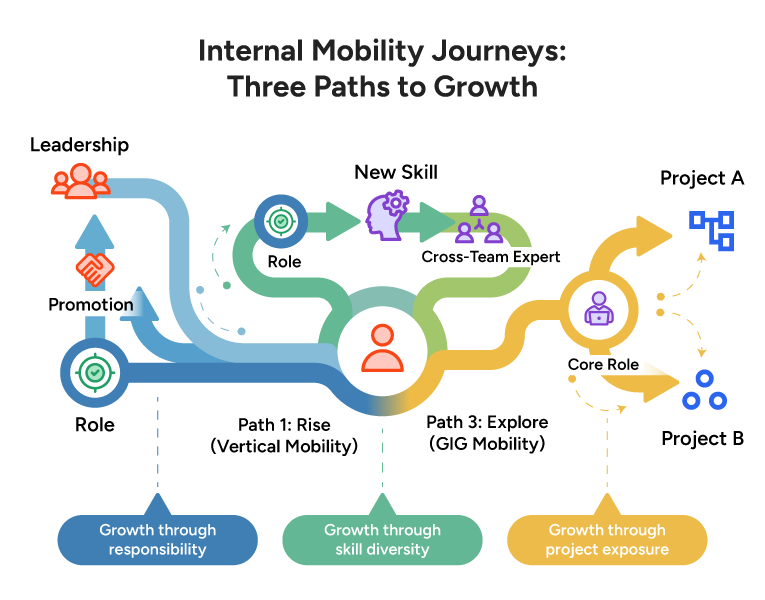
Comparison Table for Types of Internal Mobility in an Organization
| Type of Mobility | What It Means | Common Examples | When It Works Best |
|---|---|---|---|
| Vertical Mobility | Movement to a higher role with increased responsibility | Promotions, leadership roles, and role upgrades | When rewarding performance and building future leaders |
| Lateral Mobility | Movement across roles at the same level | Department transfers, role changes, cross-functional shifts | When developing new skills and reducing role stagnation |
| Gig-Based Mobility | Short-term or project-based internal assignments | Internal projects, task forces, temporary roles | When testing skills quickly or filling short-term business gaps |
Gig-based mobility has become increasingly popular as organizations prefer agility without permanent role changes. These assignments allow employees to test new skills, explore different functions, and contribute to high-priority initiatives while maintaining their primary role. This flexibility benefits both employee development and organizational responsiveness to urgent business needs.
5 Key Benefits of Internal Mobility for Businesses
The internal talent movement supports organizations in numerous ways. Here are a few data-backed reasons why internal mobility should be a priority at your organization:

1. It Saves a Lot of Money
Hiring new people is expensive. You have to pay recruiters. You have to spend time interviewing. It costs about 1.5 times an employee’s salary to replace them.
An internal talent marketplace, supported by modern recruitment management software, allows organizations to look inward first. By identifying and matching existing employees to open roles, companies can reduce their reliance on external hiring and shorten the overall time-to-hire
2. You Keep Important Knowledge
When a person leaves, they take their knowledge with them. They know how the coffee machine works and how to talk to difficult clients. If they stay but just move desks, you keep that knowledge in-house.
3. It Fixes Skill Gaps
Sometimes you need a specific skill, but you can’t find it outside. Maybe someone in your accounting team knows how to code Python. If you have internal mobility, you can find that person and let them use that skill.
4. People Stay Longer
Employees leave when they feel stuck. If they see a future at your company, they will stay. It is that simple.
5. They Get to Work Faster
A new hire takes months to learn the ropes. An internal hire already knows the company. They know the passwords and where the bathroom is. They can start working for real in just a few weeks.

Why Employees Value Internal Career Paths
Companies with robust internal talent mobility programs demonstrate clarity, growth, and fairness in how opportunities are created and communicated. Employees know which role they’re aiming for next and what they need to do to get there. They don’t feel limited by a rigid career path. Research shows that 94% of employees would stay longer at an organization that invests in their career development.
When internal roles are visible and accessible, employees invest time and effort in ongoing skill development, gain confidence in their future within the organization, and feel recognized, which contributes to stronger employee retention and engagement.
Common Challenges in Implementing Talent Mobility and How to Overcome Them
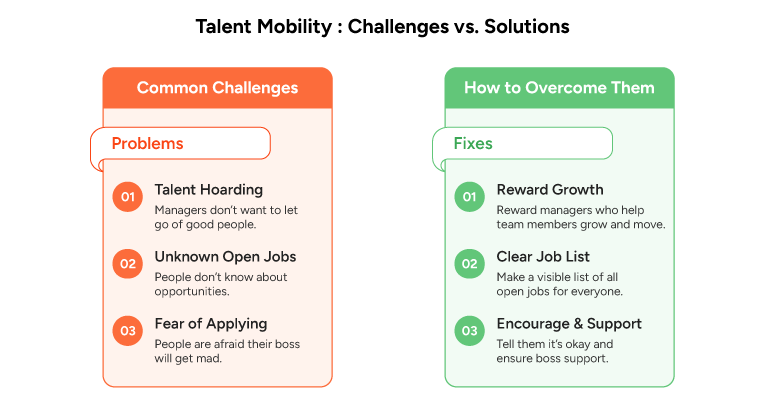
It is not always easy. Here are things that might go wrong and how to handle them.
- Problem: Managers don’t want to let go of good people. We call this “talent hoarding”.
- Fix: Reward managers who help their team members grow. Make it a good thing to send people to other teams.
- Problem: People don’t know about open jobs.
- Fix: Make a clear list of all open jobs. Let everyone see it.
- Problem: People are afraid to apply.
- Fix: Tell them it is okay to apply. Make sure their current boss doesn’t get mad.

How to Build Your Strategy: A 4-Step Action Plan

A successful internal mobility strategy aligns business needs with employee aspirations. Below is a step-by-step approach for organizations to build sustainable internal talent mobility programs.
Step 1: Audit Your “Skills Inventory”
Stop looking at job titles. Use Performance Management Software to map skills.
- Action: Run a survey asking employees to list “hidden skills” (skills they have but don’t use in their current role).
Step 2: Launch an Internal Talent Marketplace
Create a digital hub (like an internal LinkedIn) where managers post “Gigs” and employees post “Interests.”
- Tech Stack: Ensure your HRMS supports AI matching to automate this process.
Step 3: Gamify Cross-Functional Learning
Create “Scholarships” for lateral moves. If a Sales rep wants to move to HR, sponsor their certification before the move happens.
Step 4: Formalize the “First Look” Policy
Mandate that all roles must be posted internally for 7 days before being released to external job boards.
To make transitions smoother, it also helps to standardize documents, such as promotion and employee transfer letters, and align role changes with a clear transfer and relocation policy.
Measuring Success: KPIs for 2026
How do you know if it is working? Look at these numbers:
- Internal Fill Rate: How many jobs did you give to your own people vs strangers?
- Retention: Are people staying longer than before?
- Time to Fill: Are you filling jobs faster now?

Conclusion
The importance of mobility in human resource planning is reflected in its direct impact on employees’ perceptions of their growth and future within the organization. When employees see clear internal opportunities, engagement and retention improve. Hiring time and costs also reduce because roles are filled by people who already know the business.
As younger generations make up a larger part of the workforce, employees seek more varied career experiences rather than a single, linear career path. Employees want visibility into where they can progress in their careers and what skills they need to achieve their goals.
Building an internal mobility program that works for both employees and leadership means removing cultural and structural roadblocks. This is where an advanced HRMS solution plays a key role. factoHR brings employee skills, performance data, and career progression into one system, making it easier to manage promotions, transfers, and role changes transparently and consistently.
Frequently Asked Questions
What is an Example of Internal Mobility?
Promoting a team member to a team lead role after an unexpected resignation is a clear example of internal mobility.
What is the Biggest Barrier to Internal Mobility?
Talent Hoarding. Managers fear losing their best team members. The solution is to incentivize managers on “Talent Export”, rewarding them when their team members get promoted to other departments.
Does Internal Mobility Increase Retention?
Employee retention increases with internal mobility, as employees are more likely to stay when growth opportunities exist within the company.
What are the Three Types of Internal Mobility?
Internal mobility is categorized as:
- Vertical mobility (promotions)
- Lateral mobility (role changes at the same level)
- Gig-based mobility (temporary projects or assignments)
How do You Measure Internal Mobility?
Internal mobility is measured using internal fill rate, time-to-fill, retention rate, and post-move performance KPIs.
What is the Difference between Talent Mobility and Internal Mobility?
Internal mobility focuses on identifying skills within an organization’s internal staff and creating opportunities for growth and movement. Talent mobility refers to the movement of employees across locations, business units, and roles, both within and beyond the organization.
What is the Difference between Career Pathing and Internal Mobility?
Career Pathing is the plan (the map). Internal Mobility is the action (the vehicle). You need pathing software to visualize where you can go, and a mobility policy to help you get there.
Why does Your Organization Need an Internal Mobility Strategy?
An internal mobility strategy brings structure and fairness to employee movement across the organization. It helps organizations retain talent, close skill gaps, reduce hiring costs, and create clear career paths.

Grow your business with factoHR today
Focus on the significant decision-making tasks, transfer all your common repetitive HR tasks to factoHR and see the things falling into their place.