
Background Verification Process: Complete Guide for HR
Table of Contents

Background verification is the process employers use to confirm that a candidate’s identity, educational qualifications, employment history, and criminal record are accurate before making a final hiring decision. In India, this typically involves checks across government databases, university records, EPFO portals, and previous employer confirmation.
This guide explains how background verification works and why it is necessary for building a reliable and secure workforce.
In this Guide, You Will Learn:
- What background verification is and why it matters
- Why do companies conduct background checks
- Types of checks involved in the process
- When background verification is done
- Step-by-step verification process in India
- Common red flags to watch during verification
- Best practices HR teams can follow
What is Background Verification?
Background verification is the process employers use during the hiring process to confirm the accuracy of a candidate’s information. It typically includes checks on identity, education, employment history, criminal records, and address details to ensure authenticity and reduce hiring risks.
This step is usually done after interviews and before final selection to help organizations build a trustworthy workforce and prevent fraud or misrepresentation.

When do Companies Perform Background Verification?
Background verification is typically conducted during the recruitment process, after a candidate clears HR interviews but before a final job offer is made. This allows employers to make an offer based on successful verification, helping reduce legal risks and prevent hiring delays.
After Interview Selection
Once a candidate clears the interviews, companies usually begin background checks to ensure the candidate is genuine. This helps HR avoid spending time and effort on someone who may have given false information about their qualifications or work history.
Before Final Job Offer
This is the most common stage, where the company gives you a conditional offer. This means the job is yours as long as you pass a background check. The company does this to protect itself by verifying your criminal record, education, and past work history before you sign a final contract.
After Employee Joins (Post-Employment Checks)
In some fast-paced industries, employees start working while the verification process continues in the background. If the final report reveals significant discrepancies or “red flags” after the start date, the company typically reserves the right to terminate the employment immediately.
Types of Background Verification Checks Companies Conduct
Identity Verification
The first step in a background check is verifying a candidate’s identity by checking their government-issued ID, like a passport, driving license, or Aadhaar card.
Address Verification
The organization may verify the candidate’s current and previous addresses to ensure they are accurate.
Employment Verification
Past employment history is verified by contacting previous employers’ HR departments to confirm job titles, responsibilities, and tenure.
Education Verification
Companies also verify a candidate’s educational qualifications by checking with the university or board that issued the certificate or degree.
Criminal Background Check
Check the applicant’s identity, education, and work experience to avoid hiring mistakes due to incorrect information.
Credit History Check
Companies may check a candidate’s credit history to understand how responsibly they handle money, but only with the candidate’s consent. This is less common or limited in many regions (including parts of India). It is usually done for senior roles or jobs in banking and finance, where handling money responsibly is crucial.
Reference Check
The organization may also perform a reference check by contacting the candidate’s previous employers or colleagues to verify their work performance, behavior, and work ethic.
Why Companies do Employee Background Verification
Companies conduct background checks to reduce hiring risks and build a reliable workforce. Many organizations use HR software to manage records, streamline hiring, and boost operational efficiency.
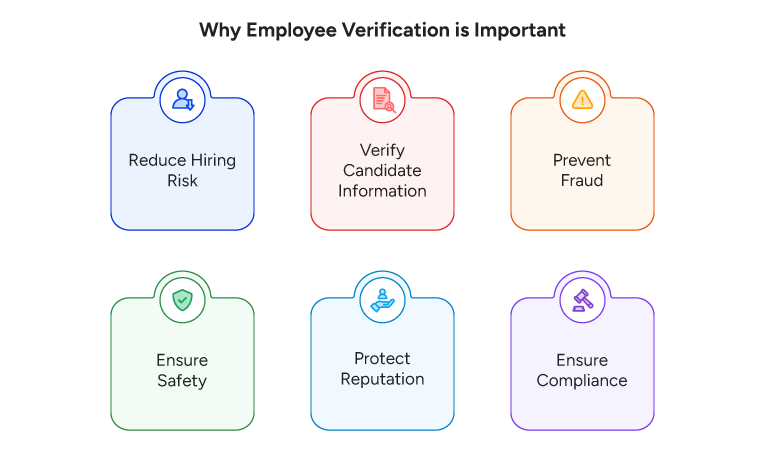
- Prevent Hiring Fraud: Background checks detect false claims and misleading information to ensure only qualified candidates are hired.
- Ensure Workplace Safety: Background checks protect employees, clients, and company property by reducing the risk of hiring individuals who may pose safety risks.
- Verify Candidate Credentials: Confirm education, employment history, and identity to prevent hiring errors caused by inaccurate information.
- Maintain Company Reputation: Hiring reliable employees increases credibility and supports company standards, and promotes a positive public image.
- Meet Legal and Compliance Requirements: Background checks help companies follow laws and regulations. It helps avoid possible legal problems and penalties.
Spending Too Much Time Drafting Verification Letters?
Use ready-to-use formats to create accurate and professional verification letters.
Background Verification Process in India (Step-by-Step Guide)
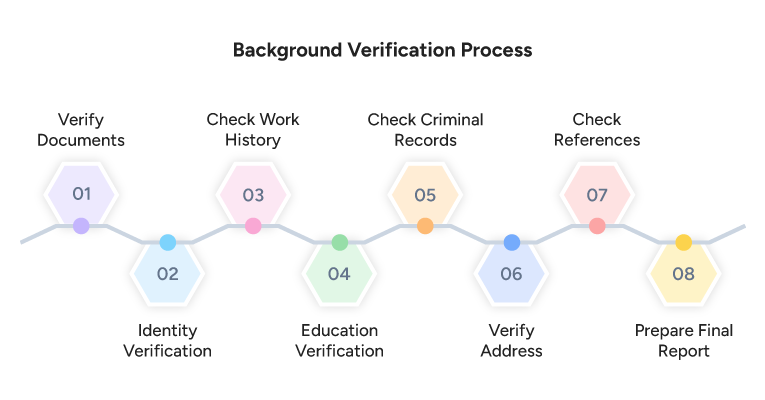
Understand how employee background verification works in India, from document collection to final verification reports. This step-by-step guide helps HR teams ensure accurate hiring while reducing compliance risks.
Step 1: Candidate Consent and Required Documents
Employers first obtain the candidate’s consent before starting background verification. The candidate submits KYC documents (PAN, Aadhaar), educational certificates, and employment proofs (offer/relieving letters, and last 3 months’ pay slips) for verification.
Since salary slips are among the key documents reviewed during employment verification, any discrepancy in them can be a serious red flag, especially in cases involving fake salary slip punishment in India.
These documents help verify the candidate’s details. Companies also use document management systems to store and track them securely during the hiring process.
Step 2: Identity Verification
Confirms you are who you claim to be by comparing your government-issued ID details with official records. This helps ensure there are no fake identities or false documents in your application.
Step 3: Employment History Verification
This step verifies job details, such as your role, tenure, and reasons for leaving, by contacting your previous employers and reviewing EPFO records. It helps confirm that the information on your resume matches your actual work history.
Step 4: Education Verification
Candidate’s degrees and certificates are verified with the university or official databases, such as the National Academic Depository, to ensure they are genuine.
Step 5: Criminal Record Check
This involves scanning local police records and court databases for any past or pending legal issues. It helps the employer assess a candidate’s character and ensure workplace safety.
Step 6: Address Verification
Physical or digital checks to verify the candidate’s current and permanent address.
Step 7: Reference Check
The hiring team contacts the references you provided, like your former managers or colleagues. These conversations give insights into your work ethic, performance, and behavior.
Step 8: Final Background Verification Report
All gathered information is compiled into a report and reviewed using Red/Amber/Green (RAG) status to highlight clear areas, warnings, and issues. HR uses this report to make the final hiring decision, and once everything is verified, the company proceeds with employee onboarding.
Need a Joining Letter Format?
Once verification is complete, the next step is sending a proper joining letter. Use the right format to make onboarding smooth and professional.
Common Red Flags Found during Background Verification
Verification helps find differences in a candidate’s information that could indicate potential risks in hiring. Here is a simple list of common red flags to look out for:
Fake Experience Letters
Some candidates may provide fake job letters from non-existent companies or with details that can’t be verified. Discrepancies often appear in the company logo, contact details, or the letter’s format and style.
Incorrect Employment Dates
Mismatched dates between resumes and employer records are often used to cover job gaps or to meet minimum experience requirements. Even a difference of a few months may imply a lack of integrity to a careful recruiter.
Fake Educational Degrees
Some candidates show fake or unrecognized degrees and certificates. Companies usually verify these directly with the institutions to ensure the qualifications are valid.
Criminal Record Issues
Having a record does not always mean automatic disqualification, but not disclosing a history of financial fraud or violent crime is a serious red flag. It raises concerns about workplace safety and the candidate’s honesty.
Identity Mismatch
This happens when personal details like Social Security numbers, PAN, or passport info do not match government records. Sometimes it’s just a small error, but in serious cases, it could mean identity theft or a fake identity.

Best Practices for HR Teams during Background Verification
Managing the background verification (BGV) process requires a balance between thorough checks and compliance with legal requirements, data privacy, and regulatory standards. Here is a breakdown of best practices to help the HR team remain efficient and professional.
Obtain Candidate Consent
Make sure you receive the candidate’s written and separate permission before starting any checks. This is required by law in many countries, including India. Provide clear information without extra conditions to avoid problems, and consider using e-signatures to save time.
Verify Information from Multiple Sources
Check a candidate’s details across multiple sources, such as colleges, past employers, and official records, to ensure the information is accurate. Relying on a single source can lead to mistakes or missed red flags.
Maintain Data Privacy and Security
Keep all collected information confidential and store it in secure, encrypted systems with limited access. Following data protection laws, such as GDPR and local regulations, helps prevent legal issues and protect the candidate’s sensitive information.
Use Reliable Verification Partners
Work with trusted verification agencies. Choose tech-enabled platforms that integrate with your ATS to improve speed without compromising accuracy. Review their security and compliance annually.
Keep Proper Documentation
Keep detailed records of every step, from the candidate’s consent form to the final verification report. A well-organized audit trail is important for handling disputes and showing fair hiring practices during internal audits.

Role of HR Software in Background Verification Management
HR software is no longer just used to store employee data. It helps HR teams handle background verification more efficiently, adhere to internal HR policy, and reduce manual work while ensuring accuracy.
- Centralized Employee Data: HR software stores all candidate details in a single employee database. This helps reduce mistakes and allows teams to access information easily.
- Verification Status Tracking: It offers real-time dashboards to track progress from start to finish and spot issues. HR teams receive alerts about delays, approvals, or problems, helping them make faster decisions.
- Integration with Verification Agencies: API integrations push candidate data to external verifiers and automatically pull back results. This reduces paperwork, confirms data accuracy, and attaches reports directly to employee profiles.
Conclusion
The verification process is important for employers to validate candidate credentials, reduce risks, and maintain a trustworthy workplace. By verifying identity, education, work history, and criminal records with the candidate’s consent, ensure well-informed hiring decisions and meet regulatory standards.
Ultimately, effective background checks improve company integrity, minimize errors, and, over time, promote a reliable workforce.
Frequently Asked Questions
What is Background Verification in India?
Background verification in India is a pre-employment process where employers confirm a candidate’s identity, educational qualifications, employment history, and criminal record before issuing a final offer letter. It is governed by company policy and, for consent-related requirements, by the Digital Personal Data Protection Act 2023. Most Indian companies complete standard background checks within 2 to 5 business days.
What Documents are Required for Background Verification?
Background verification in India requires three categories of documents. Identity verification requires an Aadhaar card, PAN card, or passport. To verify employment, you must submit offer letters, relieving letters, and the last three months’ salary slips. Finally, education verification demands degree certificates, mark sheets, and provisional certificates. Employers may also request a UAN number for EPFO-based employment history verification.
Background verification in India requires three categories of documents. For identity verification: Aadhaar card, PAN card, or passport. For employment verification, offer letters, relieving letters, and the last three months’ salary slips. For education verification: degree certificates, mark sheets, and provisional certificates. Employers may also request UAN number for EPFO-based employment history verification.
How Long does Background Verification Take?
This type of verification usually takes 2 to 5 business days for standard checks, such as employment or education. However, more detailed or international checks can take between 7 and 21 days.
Can a Job Offer be Canceled after Background Verification?
Yes, a job offer can be canceled if the background check finds false information, criminal records, or significant discrepancies in your details. Employers do this to avoid risks and follow their company policies.
What Happens if Background Verification Fails?
If only minor differences come up, candidates usually get a chance to explain. But for serious issues such as fake credentials or criminal records, the employer might cancel the job offer or terminate employment.
Is Background Verification Mandatory in India?
Background verification in India typically takes 2 to 5 business days for standard checks including employment and education. Criminal record checks, international employment verification, or checks involving government databases can extend the process to 7 to 21 business days. Companies using automated BGV platforms integrated with EPFO and the National Academic Depository can significantly reduce turnaround times.
Can Companies Check Criminal Records during Hiring?
Yes, companies often check criminal records when hiring to keep the workplace safe and trustworthy, especially for sensitive jobs. Employers need your consent and must comply with data privacy laws.
What is RAG Status in Background Verification?
RAG status in background verification stands for Red, Amber, and Green. Green means all checks passed with no discrepancies. Amber indicates minor inconsistencies that require clarification from the candidate before a final decision. Red flags serious discrepancies such as fake credentials, undisclosed criminal records, or identity mismatches that typically result in offer cancellation or immediate termination if discovered post-joining.



Grow your business with factoHR today
Focus on the significant decision-making tasks, transfer all your common repetitive HR tasks to factoHR and see the things falling into their place.