
Appreciation Letter: Format, Samples & Templates for 2026
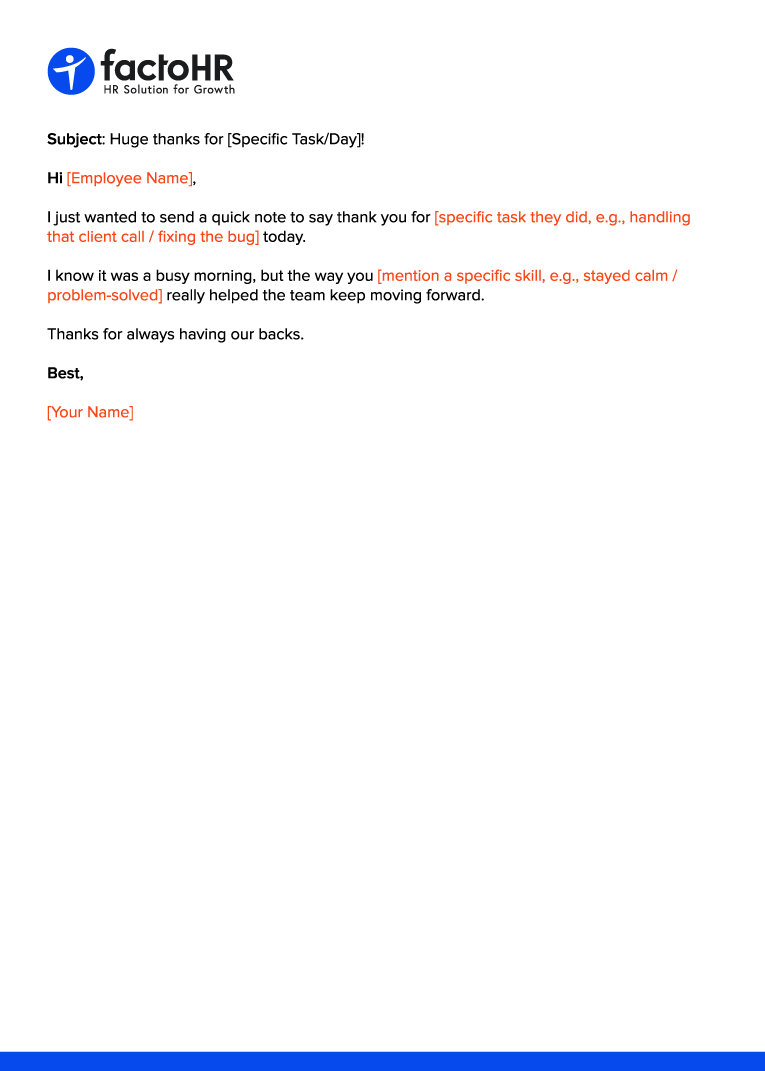
Appreciation Letter To Employees For Good Work Template

Table of Contents

Employees are the most valuable asset of any organization. Yet research shows that only 22% of employees feel they receive effective, timely recognition. This gap makes the humble appreciation letter a powerful tool for leadership.
Writing a well-crafted letter of gratitude is more than just good manners; it is a strategic necessity. A sincere note can boost morale, improve engagement, and significantly aid in retention. But knowing what to write and how to format it can be a challenge.
If you are looking for the perfect appreciation letter format or just need a quick appreciation mail for good work, you are in the right place. We aren’t going to give you stiff, robotic templates. We are going to give you words that sound human.
What is an Appreciation Letter?
An appreciation letter is a written document or email sent by an employer or manager to an employee. Its only job is to recognize their hard work, a specific achievement, or their positive attitude.
Unlike a casual verbal “thanks,” a written letter provides a tangible record of achievement. It goes beyond generic praise by highlighting specific impacts, making the recipient feel seen and valued. Whether it is for a work anniversary, a successful project, or simply consistent performance, an appreciation letter serves as a lasting reminder of an employee’s value to the organization.

Why Appreciation Letters Matter for Your Organization
Before diving into the format, it is impactful to understand why you should make this a regular habit.
- Boosts Morale: A personalized letter boosts morale, validates an employee’s effort, and creates a sense of belonging and immediate joy.
- Strengthens Relationships: It bridges the gap between management and staff, fostering a connection built on mutual respect rather than just transactional work.
- Encourages Loyalty and Retention: 65% of employees admit they might not have changed jobs (forcing you to write a relieving letter) if they had received timely recognition. Gratitude is a key driver of retention.
- Creates a Culture of Recognition: When leaders model gratitude, it encourages a ripple effect in which employees recognize and support one another.
The Anatomy of a Perfect Appreciation Letter Format
While these letters are semi-formal, allowing for some creative freedom, the most effective appreciation letter format includes four key components:
- Personalized Greeting: Always address the employee by name. Avoid “Dear Employee.”
- The “Specific” Hook: Immediately mention what you are appreciating. Was it a specific project or one of their quarterly OKRs? Be precise.
- The Impact: Explain how their action helped the company, the team, or a client. This connects their work to the bigger picture.
- A Forward-Looking Closing: End with a note of encouragement about their future with the organization.

Trending Appreciation Letter Templates & Samples (2026)
Below are six versatile templates covering the most common scenarios. You can copy, paste, and customize these to suit your needs.
Sample 1: Project Success & Impact
Best for: Acknowledging specific contributions to a successful campaign or project.
Subject: Appreciation for your contribution to the [Project Name] success
Dear [Employee Name],
I genuinely appreciate your tireless efforts and creativity in executing our recent [e.g., Email Marketing Strategy]. It is with a sense of pride that I inform you our campaign has generated [mention specific results, e.g., 20% more leads].
From your first day at [Company Name], you have been reliable and persistent. Specifically, the last three campaigns have yielded [mention percentage] growth under your watchful leadership. I want to assure you that this hard work creates tangible value for all of us.
We are proud to have you on the team.
Sincerely,
[Your Name]
Sample 2: General Appreciation Mail for Good Work
Best for: Recognizing “soft skills” and event organization.
Subject: Appreciation for your outstanding work on [Project/Event]
Dear [Employee Name],
I wanted to take a moment to appreciate your outstanding performance at the recent [e.g., Company Get-Together]. You made our clients and employees feel relaxed, and the atmosphere was fantastic.
The event would not have been as successful without your logistical efforts. You did an excellent job scheduling our product exhibition despite tight time constraints. Thank you for organizing an unforgettable experience for the team.
Best regards,
[Your Name]
Sample 3: Performance Recognition (with Reward)
Best for: tying recognition to bonuses or appraisals.
Subject: Letter of appreciation for exceptional performance
Dear [Employee Name],
The leadership team genuinely appreciates your performance this quarter! Particularly, your work on [mention specific task, e.g., the new Content Calendar] was exemplary.
I assure you that your dedication hasn’t gone unnoticed. We have observed significant improvement in your KPIs over the last three appraisals. As a token of our gratitude, you will receive a bonus in your upcoming paycheck.
I truly appreciate your journey with us and hope you continue to perform with this same enthusiasm.
Best,
[Your Name]
Sample 4: Service Anniversary Acknowledgment
Best for: Celebrating loyalty and tenure (5, 10, or 20 years).
Subject: Celebrating your 10 years with [Company Name]
Dear [Employee Name],
I would like to reflect on your 10 years of service to [Company Name]. You have been one of the few constants for this organization through times of both challenge and success.
From your very first day as an entry-level hire to your current role as [Current Role], your journey inspires us all. In particular, your unwavering commitment to mentoring junior employees has been exceptional.
Thank you for your decade of service. We look forward to celebrating with you at the event organized in your honor.
Yours truly,
[Your Name]
Sample 5: Client Appreciation Letter
Best for: Strengthening B2B relationships.
Subject: Thank you for our partnership
Dear [Client Name/Senior Manager],
We at [Your Company Name] truly appreciate your valuable partnership during the recent [mention project, e.g., M&A negotiations]. Your cooperation and transparency enabled us to achieve [mention specific result].
We value the trust you place in us and look forward to continuing our mutually beneficial relationship with [Client Company Name].
Warm regards,
[Your Name]
Sample 6: Appreciation Note for Teachers
Best for: Educational institutions recognizing faculty.
Subject: Thank you for a successful academic year
Dear [Teacher Name],
As we reach the end of another academic year, I want to take a moment to appreciate your notable contributions to [School Name]. Your rapport with the students has been evident from day one. Your modern approach to [Subject Name] has not only challenged our views but also improved our overall teaching practices.
Thank you for shaping the minds of our future generation.
Yours sincerely,
[Your Name]
Sample 7: Appreciation for Leadership and Mentorship
Managers need love, too! If you have a senior employee who mentors juniors, you need to encourage that behavior.
Subject: Thanks for helping [New Hire Name]
Hi [Name],
I noticed how much time you spent helping [New Hire Name] get settled in this week.
It wasn’t in your job description to walk them through the software training, but you did it anyway. That kind of leadership makes our work so much smoother.
Thank you for being such a supportive leader.
Best,
[Your Name]
Sample 8: Formal Appreciation Letter to Employee
[Company Logo/Header]
Date: [Date]
Dear [Employee Name],
I am writing to formally recognize your outstanding performance over the last quarter.
Your dedication to the [Project Name] was clear to everyone. Specifically, the way you handled the data migration challenges showed a level of skill and patience that we rarely see. Because of your focus, the team finished three days ahead of schedule.
We are lucky to have you at [Company Name]. Please keep up the fantastic work.
Sincerely,
[Signature]
[Your Name]
[Your Title]

How to Write an Appreciation Letter (Step-by-Step)
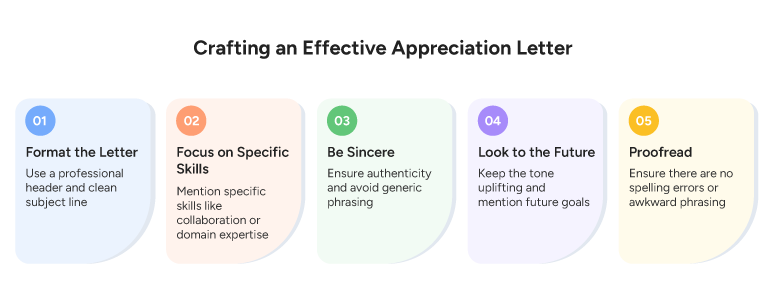
If you want to draft a unique letter from scratch, follow this five-step process to ensure it lands effectively.
- Format the Letter: Use a professional header and clear subject line.
- Focus on Specific Skills: Do not just say “good job.” Mention specific skills like collaboration, domain expertise, or crisis management.
- Be Sincere: Authenticity is the most important element. If the letter feels automated or generic, it loses its impact.
- Look to the Future: Keep the tone uplifting. Mention how their work helps the organization’s future goals.
- Proofread: As a leader, you must lead by example. Ensure there are no spelling errors or awkward phrasing.
Do’s and Don’Ts of Gratitude
| Do’s | Don’ts |
|---|---|
| Be specific about achievements. | Be vague or generic (“Thanks for everything”). |
| Use simple, warm words. | Use complex corporate jargon. |
| Keep it concise. | Write overly lengthy, rambling letters. |
| Personalize for each employee. | Copy-paste templates without editing. |
| Send it timely (soon after the event). | Wait months to acknowledge a win. |
When to Send an Appreciation Letter
Timing is everything. Here are the five best occasions to send a letter of appreciation:
- Recognizing Performance: Using a proper recognition letter format immediately after a project completion or quarterly review helps reinforce productivity.
- Acknowledging Specific Contributions: When an employee goes above and beyond their job description.
- Service Anniversaries: To celebrate loyalty and tenure.
- End-of-Year Appreciation: To look back at the year’s collective success.
- Client & Donor Relations: To maintain professional bonds after a deal is closed.

5 Mistakes that Ruin an Appreciation Letter
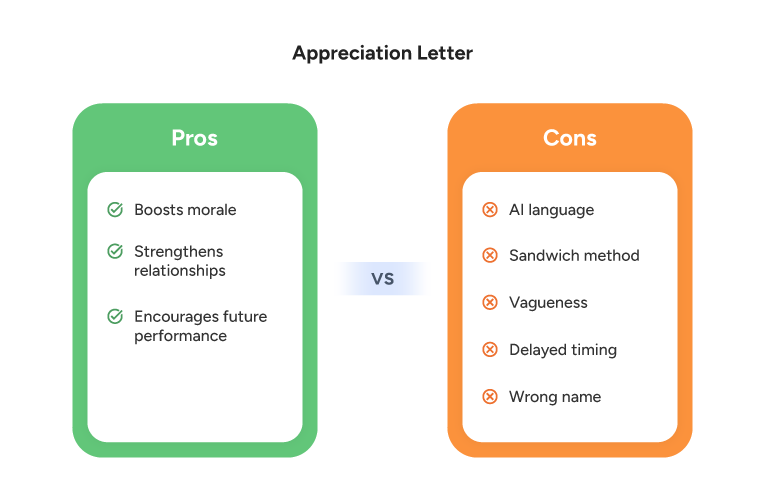
You are trying to be nice, but if you do it wrong, it can backfire. Here is what to avoid.
- Using “AI” Language: If your letter sounds like a robot wrote it, don’t send it. Avoid words like “synergy,” “paradigm,” or “utilize.” Just say “teamwork,” “model,” and “use.”
- The “Sandwich” Method: Don’t put appreciation inside a criticism. “Great job on the report, but next time, check the font. Thanks again.” No. Keep the feedback separate. Let the appreciation stand alone.
- Being Vague: “Good job on everything” feels lazy. “Good job on the Q3 spreadsheet” feels real.
- Waiting Too Long: If they did the good work in January, don’t wait until their December review to say thanks.
- Wrong Name: This sounds obvious, but if you copy and paste a template, double-check that you didn’t leave “[Employee Name]” in the text!
Conclusion & Next Steps
An appreciation letter is a low-cost, high-impact investment in your company culture. It builds trust, improves retention, and makes your employees feel like partners in your success. While a sincere letter is powerful, it is just one of many employee appreciation ideas you can implement to build a thriving workplace.
However, as your company grows, maintaining consistency in recognition can be difficult.
Pro Tip: Automate your gratitude without losing the personal touch. factoHR offers advanced employee engagement tools, including AI-powered chatbots and customizable appreciation letter features. We help you analyze employee mood and ensure no achievement goes unnoticed.

Frequently Asked Questions
What is an Appreciation Message?
An appreciation message is a written communication that recognizes the efforts and contributions of stakeholders, such as employees or clients. It reinforces positive behavior and strengthens professional bonds.
Should Appreciation Letters be Part of Regular HR Practices?
Yes. Regular recognition should be codified in HR policy. Consistent appreciation programs have been shown to improve employee engagement and reduce turnover rates.
Should I Follow up after Sending an Appreciation Letter?
Yes. If you sent the letter via email, a brief follow-up in person or by phone is a nice touch. It ensures the message was received (and didn’t end up in spam) and allows you to express your gratitude verbally.
How do You Start a Formal Appreciation Letter?
Start a formal appreciation letter with a professional salutation followed by the recipient’s name (e.g., Dear [Name]). Immediately state the purpose of the letter in the opening sentence, such as, “I am writing to sincerely thank you for…”. This ensures the recipient understands the context immediately.
What is the Best Subject Line for an Appreciation Email?
The best subject line is clear, specific, and positive. Examples include:
- “Thank you for your hard work on [Project Name].”
- “Appreciation for your contribution”
- “A quick note of gratitude”
- “Congratulations on a job well done.”
What are some Professional Words to Express Gratitude?
Instead of just saying “thanks,” use impactful words to strengthen your message. Strong professional appreciation words include:
- “Instrumental” (e.g., “You were instrumental in this success.”)
- “Invaluable” (e.g., “Your support was invaluable.”)
- “Exceptional” (e.g., “Your performance was exceptional.”)
- “Commendable” (e.g., “Your dedication is commendable.”)
Why is Employee Appreciation Important for Retention?
Employee appreciation is critical for retention because it fosters a sense of belonging and value. Studies show that employees who feel recognized are up to 5 times more likely to stay with an organization. It reduces burnout, increases engagement, and builds a positive company culture.
How Often Should Managers Send Appreciation Letters?
There is no strict rule, but consistency is key. Managers should aim to send formal appreciation letters for major milestones (work anniversaries, project completions) and use informal appreciation (emails, verbal praise) weekly or monthly to maintain high morale.
What is the Difference between Recognition and Appreciation?
While often used interchangeably, recognition is usually performance-based (rewarding outcomes or achievements), whereas appreciation acknowledges a person’s inherent value and effort, regardless of the outcome. A good leader uses both.


Modernize your HR tasks with factoHR today
Experience the digitalization of everyday business activities with factoHR's modern and compatible solutions for every need.